Share


Somewhere between seven and nine out of ten mergers fail to deliver the value used to justify them. Clayton Christensen and colleagues put that range in Harvard Business Review in 2011, against more than two trillion dollars of acquisitions a year. It has barely moved since.
Ask the executives who lived through those integrations what went wrong and they do not lead with price, strategy or timing. Survey after survey returns the same top answer: culture and people. “Culture” is a soft word for a hard thing. It almost always describes the same failure. Two groups went into the transaction, and two groups came out.
A man falls over
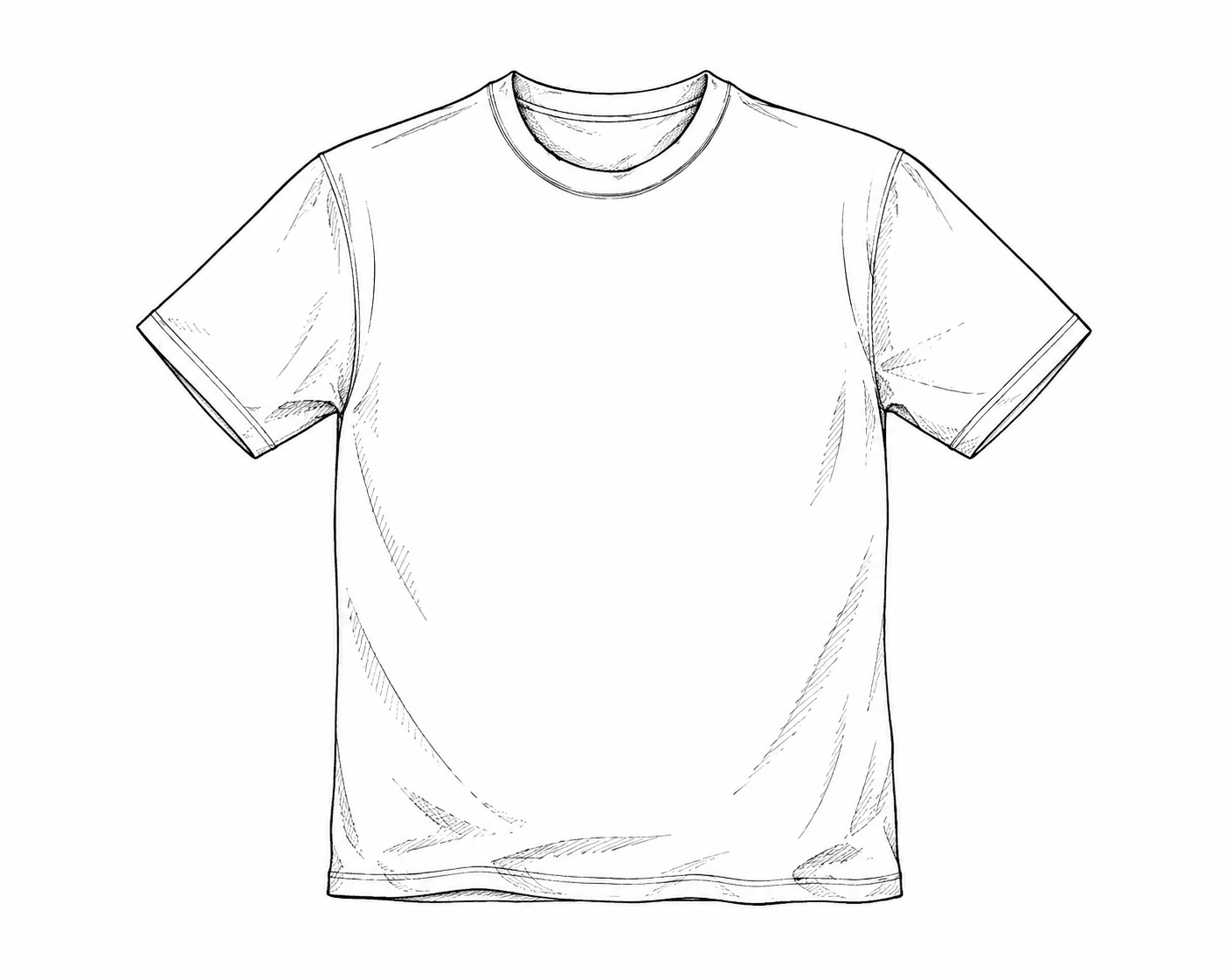
The clearest demonstration of why involves a football shirt.
In 2005, four psychologists published an experiment run on committed Manchester United supporters. Mark Levine, Amy Prosser and David Evans at Lancaster University, with Stephen Reicher at St Andrews, first asked their participants what being a United fan meant to them. The questions looked like small talk. Their real job was to bring that identity to the front of the participants’ minds.
The men were then sent to walk to another building. On the way, someone ran across the path ahead of them, slipped down a grass bank and fell, clutching his ankle. He was an actor. The only thing that varied was his shirt.
In a Manchester United shirt, almost everyone stopped to help. In a Liverpool shirt, the shirt of United’s fiercest rivals, help dropped sharply. In a plain shirt with no club on it, help dropped just as sharply.
That last result is the important one. The rival and the stranger were treated identically. Hatred was not doing the work. Neither man was one of us, and being outside the “us” cost the same whether you were an enemy or a stranger.
The same man, a different question
The researchers then ran it again, changing one thing. The opening questions now asked what it meant to be a football fan, rather than a United fan.
Same walk, same bank, same actor, same shirts. This time the Liverpool shirt was helped about as often as the United shirt. The plain shirt was still ignored, because it still belonged to no category the participants were carrying.
Nothing about the participants changed. Nothing about the injured man changed. Only the boundary of the word “us” moved, and it moved because of a questionnaire filled in ten minutes earlier.
The limits are worth naming. Both studies used small samples of male students recruited for their fandom, and helping was measured minutes after the priming. The research says nothing about how long a widened boundary holds.
Where the idea came from
The framework underneath is social identity theory, set out in 1979 by Henri Tajfel and John Turner. Tajfel, a professor at the University of Bristol in England, had lived the question. A Polish Jew studying in France when the Second World War began, he was captured serving in the French army and spent five years as a prisoner of war. He survived because his captors sorted him into the wrong category and took him for a French soldier. Almost everyone he had known in Poland did not survive.
His answer, refined with Turner, is short. We take part of our sense of who we are from the groups we belong to. If my self worth is tied to my group, I need my group to look good, and looking good is a comparison. Somebody has to look worse. Tajfel had already shown how little it takes to start one of these groups: sorted by a coin toss, strangers favoured their own side within minutes. Later work qualified parts of the theory, and the core has held across fifty years and dozens of countries.
The organisational reality
In 1989 two American management researchers, Blake Ashforth and Fred Mael, brought the idea into the workplace and named it organisational identification. It means how far a person defines themselves by their employer, their division or their team. Not how much they like it. How much of themselves they have put into it.
That distinction is the whole game. Liking is a preference, and preferences move. Identity is not a preference. Ask someone to change it and you are asking them to become somebody slightly different.
Now hold that against a real integration. A new logo. A revised org chart. Harmonised titles. A town hall with “One Company” on the slide. Every one of those changes a label. None of them changes which category is live in someone’s head at the moment they decide whether to help.
So you get a business merged everywhere except the one place that matters. Legally one entity. Two “we”s. A division loses a client to a competitor rather than hand it to its new sister unit. Information stops at the seam, and a problem reaches the executive committee three weeks after the coalface knew. The people involved are not being malicious. They are reading the shirt and deciding this is someone else’s problem.
Social identity theory is among the most cited ideas in social psychology, which is a polite way of saying everybody knows it and everybody forgets it the morning the merger is announced.
The pattern since
The wreckage is easy to list, and the same seam runs through it. Rio Tinto paid US$38.1 billion for Alcan in 2007, at the top of the commodity cycle, and wrote off around US$27 billion — Alcan’s own chief executive later called it one of the worst decisions ever made in mining.
Daimler and Chrysler announced a merger of equals in 1998 and unwound it in 2007, with participants describing two engineering cultures each convinced it was the real carmaker in the room. Hewlett-Packard took an 8.8 billion dollar write-down on Autonomy a year after buying it. In each case the acquirer arrived certain it knew how the business should be run, and the people already inside it were, in the most literal sense, the other group.
Air India and Indian Airlines. Merged by the government in 2007 into one company on paper, and two workforces in practice. In May 2012 the Indian Pilots’ Guild, representing legacy Air India crew, struck for 58 days — the longest pilots’ strike the country had seen. The trigger was management’s decision to offer training on the new Boeing 787 Dreamliner to pilots from the legacy Indian Airlines side. Around 101 pilots were sacked before the Delhi High Court ended it. Five years after the merger, the merged seniority list for pilots still did not exist.
What to do with it
The Lancaster study’s second half is the useful one, and most summaries skip it. The boundary moved. Which means the work is smaller and more repetitive than most integration programmes assume: staffing projects across the old line rather than along it, and watching who gets promoted in the first eighteen months, because everyone else is reading that as the answer to who counts as us.
And carry one question into the next integration, as a diagnostic rather than a sentiment. When your people say “we” in a meeting, who do they actually mean?
Asked directly, the question gets a diplomatic answer, so listen for it instead. If “we” means the acquired firm, the legacy airline, the old bank or the function rather than the enterprise, you do not have a communication problem that another town hall will fix. You have two groups. Somewhere in the building, a man is lying on the grass in the wrong shirt.
This is the thirteenth in a series on the research that changed how we understand organisations and the people inside them. One study per post, drawn from management, organisational behaviour, sociology and psychology, with a note on what a working leader might do with it. The selection criterion is simple: it has to have been right about something important, and mostly ignored in the places that needed it. The previous one on why organisations keep choosing the safe bet is here.