Share



We ended the post on values and identity with a simple looking instruction. When you want to tell a real value from a habit wearing its clothes, ask why. Why do I do this? Why does this task matter?
Asking ‘why’ sounds easy. It is not.
When Why Becomes a Question About You
Have you noticed what happens when someone asks you a why question? Why are you late? Why is it done this way? It pushes you on the back foot. A ‘why’ question makes us feel defensive. Like we have to explain ourselves. God help us, if we get the tone even slightly wrong. “Why did you do that?’ lands as what on earth were you thinking!
So, the trouble is, the answer to a ‘why’ question can be powerful and set us free. Yet ‘why’ is a question we would rather avoid.
Now think of the question from the previous post of identifying what we value with AI: “Why do we really do this task? Even before we realise, the conversation shifts from the behaviour to us (the person). And the moment we feel our competence, intent or credibility is being evaluated, we defend. We tend to protect ourselves rather than explore possibilities.
This is not stubbornness or a character flaw. It is human wiring, a protective reflex, doing its job. (Robert Kegan and Lisa Laskow Lahey).
So, we take a successful way out of answering a ‘why’ question.
Single Loop with AI: Looks a Lot Like Success
We can work with AI, without ever bringing up the ‘Why’ question. And it feels successful.
We continue with the same tasks in a faster manner and we never ask, Why do we really do this task? We use the latest frontier models. We use new AI tools. We produce more and faster. The report that took a full morning now takes ten minutes. Every box ticked. The output and calendar agree that we are doing well.
This is single-loop learning and it feels safe. Single-loop learning keeps the goal fixed and simply focusses on getting better at reaching it. The term Single-Loop and double-loop comes from Chris Argyris and Donald Schön. They described two very different ways of responding when something changes.
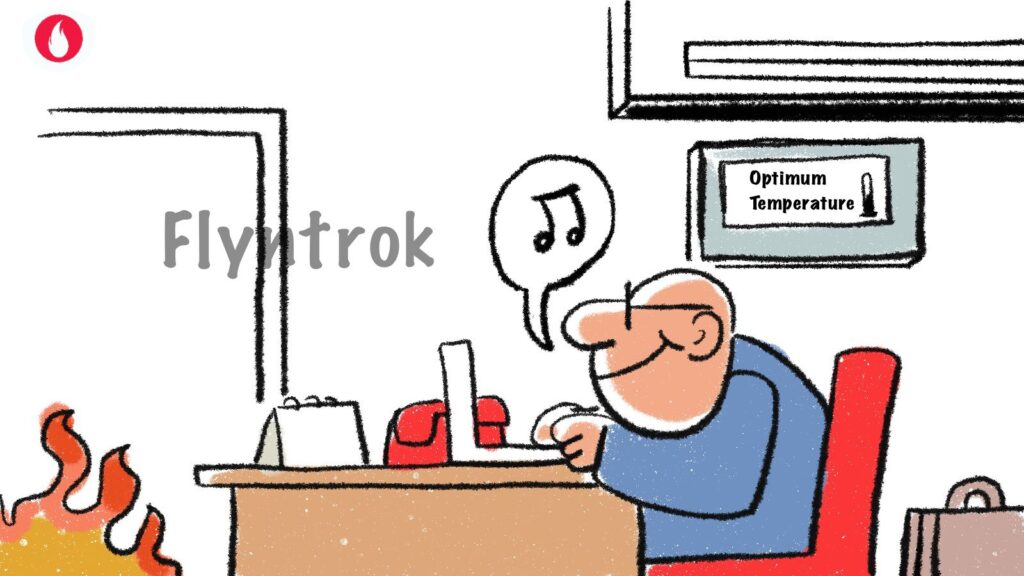
Think of a thermostat controlling temperature in a building. It would be set to a particular temperature – say 25 degrees C. When the room heats up, the thermostat notices and cooling comes on. When the room temperature goes below 25 degrees, the cooling switches off. Very reliable. Yet utterly incapable of asking the important ‘why’ question. “Why is the temperature set to 25 degrees? Is that the right temperature at all?
Most of us are using AI like that thermostat, in single loop mode. We have pointed a remarkable tool at the same old set of tasks and asked it to get it completed faster. We look successful. We are running in exactly the same place.
Double Loop with AI: Breaks The Why Barrier
There is a problem hiding in the thermostat, and I sat with it for a while. A thermostat cannot question its own setting. It has no way to stand outside itself and wonder whether twenty-five is the right temperature. Here is the uncomfortable part, neither can we, atleast not easily.
The instrument we would use to check our values is our values. You cannot spot your own comfort zone using the mind that built it. This is a blind spot in the truest sense. Not something we are too lazy to notice, but something we cannot see from where we are standing. Asking “am I only being comfortable here” from inside the comfort zone is like asking the thermostat to doubt itself.
Double-loop learning with AI is the response which not only closes the gap, but questions the ‘why’. Double loop does not ask, how do I write more code with AI? It explores the ‘why’ of writing code. Why was the code written? What did I learn by writing this code? Not just How do I do this task faster? but ‘Why should this task be done?
It does so, by separating the practice from the person. Reflecting on what you did is a non-defensive route to the why. Because you are examining the outcome and the practice, not putting yourself on trial. Double-loop asks what am I learning here? and not just did we achieve the target. By separating the individual from the task, the defensive guards come down. Finally learning gets through.
AI is that opportunity or jolt, which can trigger double-loop learning.
The Loop Runs Both Ways
The typical loop of values, actions and identity runs like this. What we value drives our actions, and our actions harden into who we are. Value, then action, then identity.
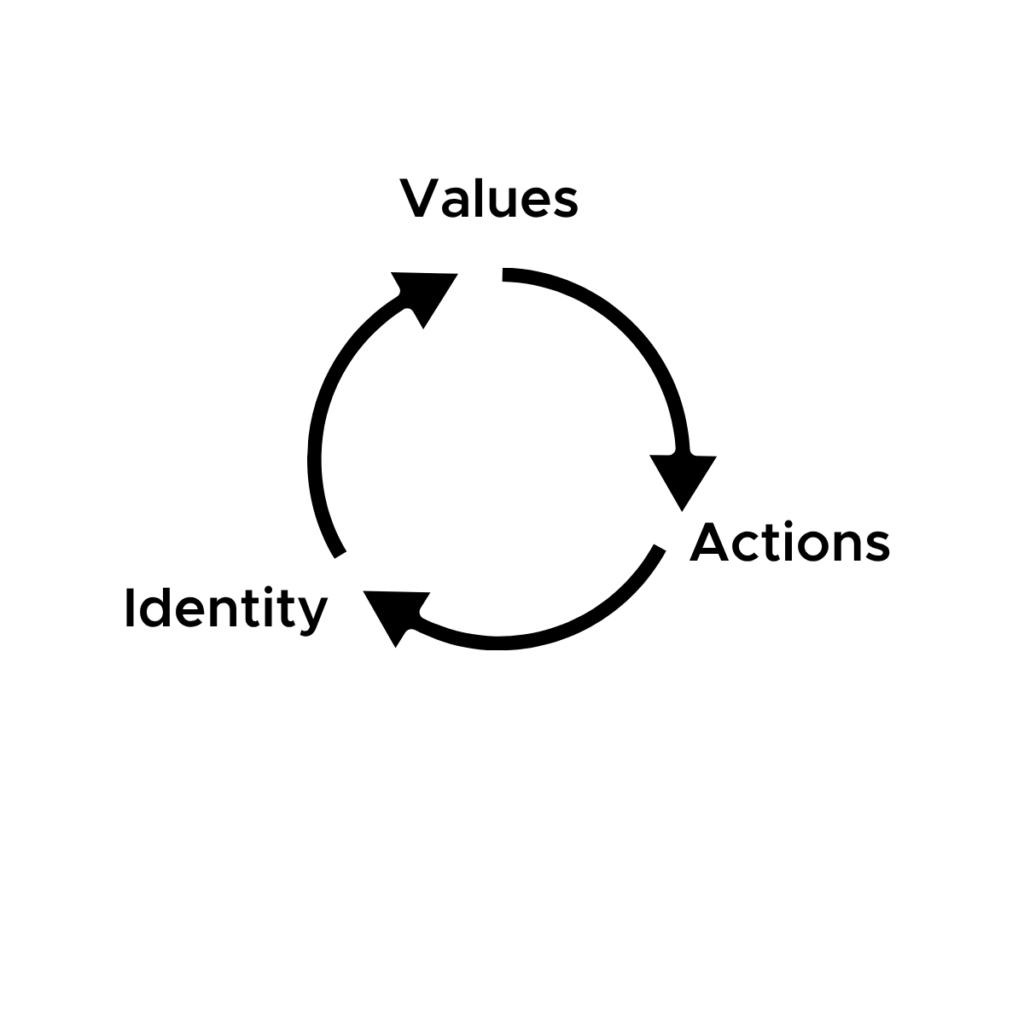
This series of our identity with AI, argues the opposite. AI is providing us an opportunity to change our actions first. And consistent new actions teach us to value differently. Action, then value, then identity. Both are true. This is not a contradiction but a loop that runs both ways.
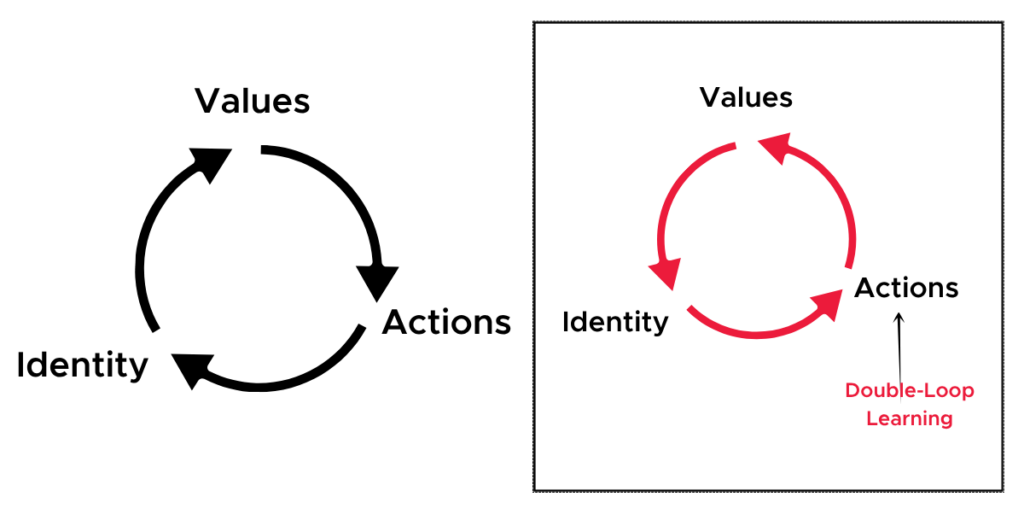
Most of the time we enter through the value door. We do what we believe matters. But when the value itself is unclear, and asking the ‘why’ only gets our defences up, we cannot get in that way. So double-loop learning addresses the ‘why’ question through the other door. Through action and reflection. AI provides the trigger for this reflection.
I could never question why my Friday report existed while I was busy writing it every Friday. Now AI writes it in four minutes. It frees up too much bandwidth to ignore and pretend like nothing has changed. AI is allowing us to ask the ‘Why’ question.

AI & The Why Question
You do not try to win the argument with your comfort zone. You run a small experiment instead. You let AI take the Friday report, and you spend the reclaimed hour on the one conversation you have been avoiding. Nothing is decided. Something is tried. And if it turns out to matter, you notice your sense of what is valuable has quietly shifted.
This is why we are not thermostats, and it is the whole point. A thermostat can only hold the setting it was handed. We can question ours, not by staring harder at the dial from inside the room, but by letting the jolt, and then our own small experiments, reset it. Each experiment is a vote for a different value. Cast enough of them, and the role you hold is no longer the one your task list handed you. It is one you have recrafted.
That practice: acting, and then talking and reflecting your way into who you are becoming, is where this series goes next.