Share


For five years i headed a committee. It started off because i wanted to contribute. Soon the impact and applause followed. I enjoyed the visibility and feeling of being good at it. I over stayed my role at the committee. I continued without realising the applause was driving me instead of the impact. Worse, i was using the committee as an excuse of busynness rather than go after other outcomes, that were scarier but crucial for my growth.
It took me a long time and courage to realise and admit that, even to myself. What i was calling and valuing as commitment was simply staying in my comfort zone.
Values are tricky. What we value, tends to lead us towards aligned actions. Very soon these repeated actions and values become our identity. One hard to separate from the other.
Earlier in this series I argued that we can build new identities by trying things, by taking actions. Identities need not always be pre-decided or unchangeable. But you don’t try things or take action at random. Some trigger or reflection has to prompt you. Giving us a clue or next step towards what to reach for and what to leave behind.
The trouble is, life keeps us busy. With our noses at the grindstone. Never ending to-do lists and deliverables. When priorities beckon, quiet spaces for reflection are the first to go. Triggers are ignored and we keep busy. We don’t look closely and we continue to run on things that we call our values.
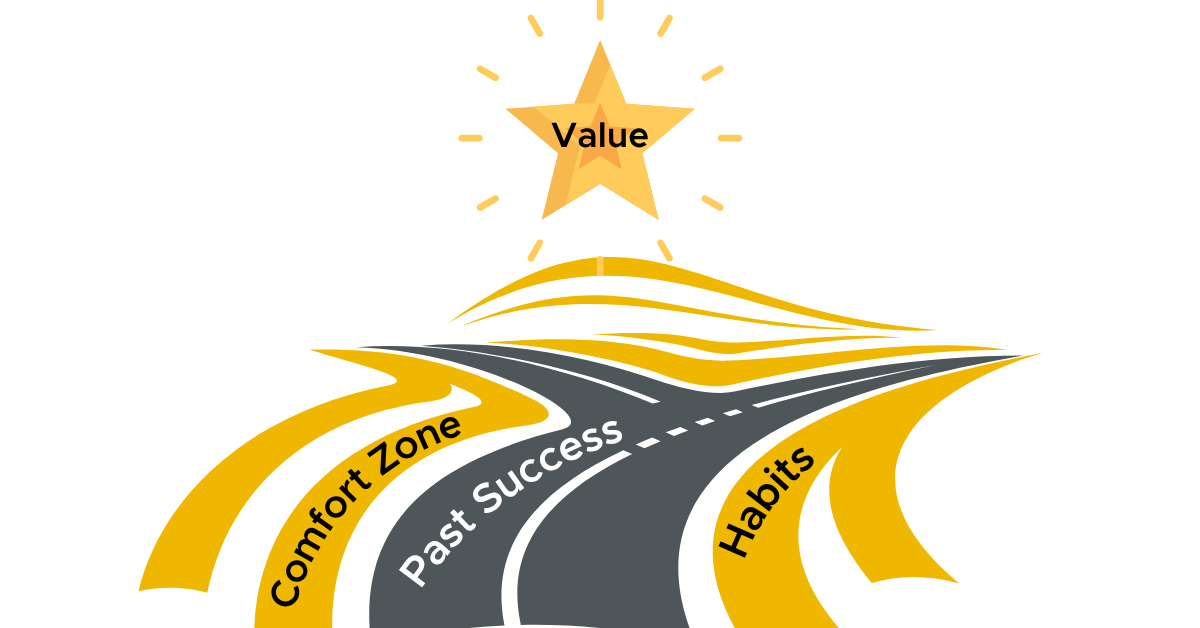
Value or Habit?
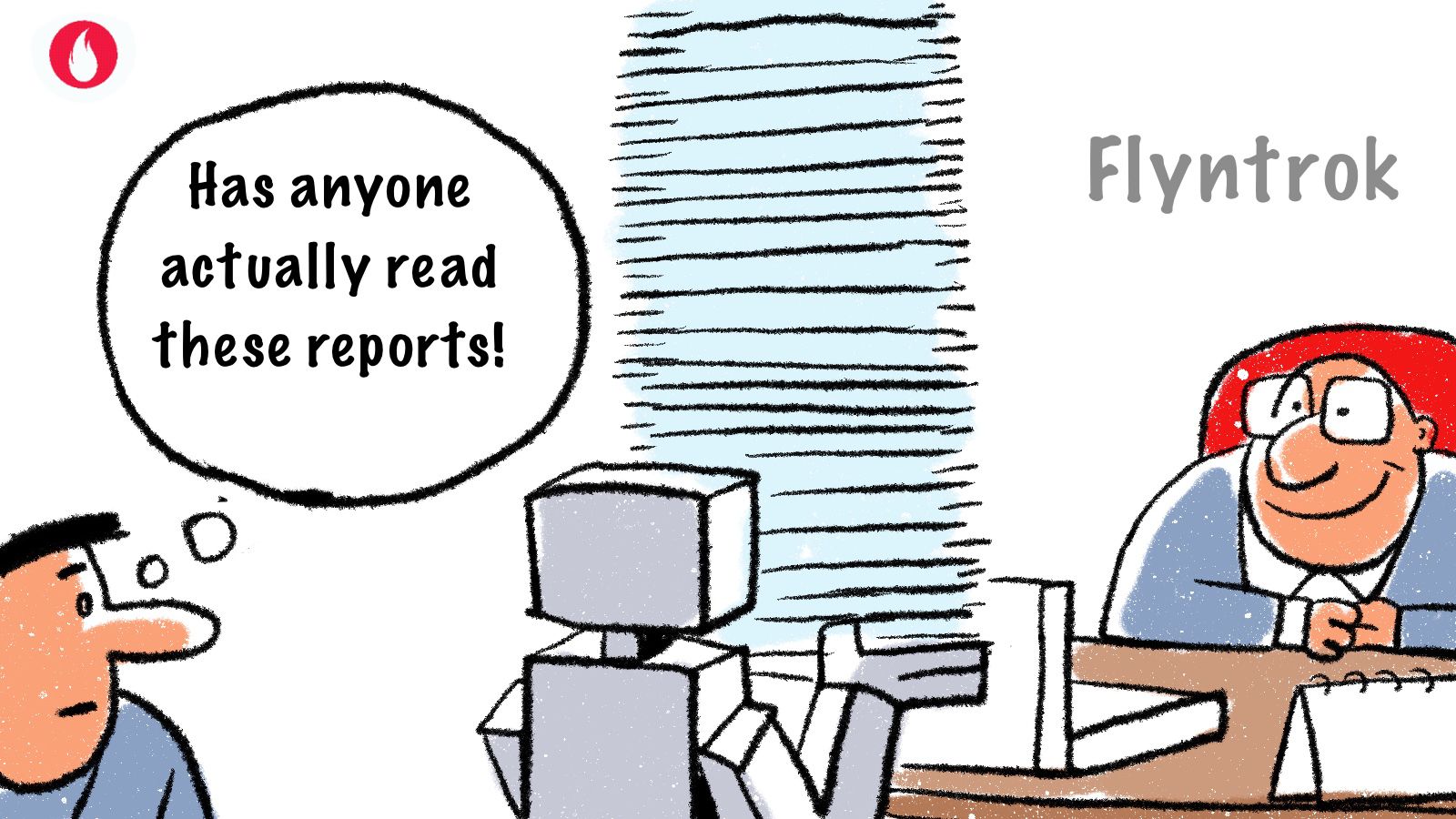
Sometimes it is a habit that has been with us for long, it becomes what we value. How many times have we not heard the phrase – this is how do things here! Think of a report that goes out to a distribution list every friday. Ask why, and the honest answer is that it has always gone out on Friday. That is not a value. That is inertia or habit in a better outfit.
Value or past success?
Sometimes it is an old success that has hardened into a rule. A move that worked brilliantly once. A playbook that saved the day years ago. Ask why, and you realise it worked so well that we stopped asking whether it still fits.
Value or comfort zone?
And sometimes, as I eventually admitted about my committee, what we are protecting is comfort. We know how the role or task works. Staying gives us the warm feeling of competence, and we dress that feeling up as our identity. It is the sneakiest of the three.
Asking ‘why’ we are doing something is the best start point in separating a habit, a past success or a comfort zone from our identity.
AI Forces Us To Ask ‘Why’!
And when AI absorbs so many of our tasks, it is a window an opportunity to pause and ask, “why”? Why did we do these tasks in the first place? What value did they bring for us?
We have been too busy, to ask the question of ‘Why’ and we have been getting away with it. Now, with AI starting to free up our time, we have an opportunity to clarify and craft the ‘Why’. A small window now, before it is settled for us.
This is an opportunity, for sure. Who we are at work was decided by the tasks that filled our day. Now, we get to craft it and answer who we are, with more deliberation. A chance to ask, ‘why’ are we doing ‘a’ particular task. Should it be delegated/automated/removed. But answering the why question is not as easy as it looks!
Noticing Our Emotions With AI
When you sit with the why, watch your own reactions closely. Notice which tasks you rush to defend, and how quickly the defence arrives. Notice too, where letting go feels more a sense of loss. That feeling is worth naming because grief is sneaky. It often shows up as a complaint about AI’s output, when what we are really mourning is a task which had become a part of us.
Notice what you are valuing through the tasks you complete
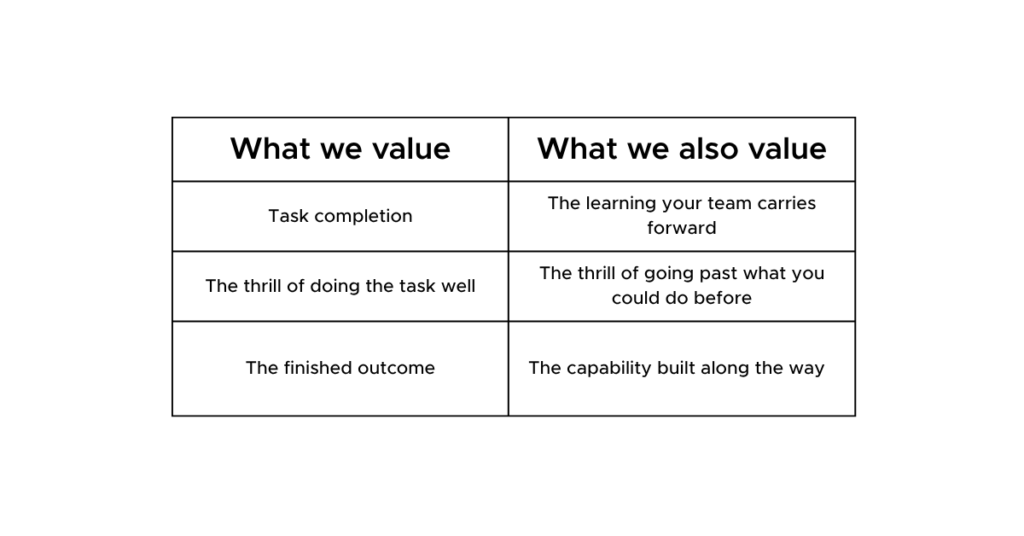
Both columns matter. Neither is wrong. But the left tends to keep us in the same orbit and the right compounds and lifts us up.
Valuing capacity building with AI
What you value will define how you use AI.
If you continue to value the habits, the comfort zone, the dopamine hit of task completion, you will resist AI. The resistance will show up in small, passive and often not easy to spot ways. If you begin valuing AI as a capacity builder, you possibly will play with AI differently. Valuing the possibility of doing what was not possible before. Rather than merely doing the old things a little faster.
Research over 100 years have shown us, we build identity and through what we value and small consistent actions. Each time you use AI to reach past your strength, instead of defending your ground, you become someone a little different. Someone whose worth is no longer tied to the tasks AI has taken. But defined by the capacity and capability being built.
This is the most energising possibility with AI. Not a faster version of who you were. You are not just choosing how to use a tool. You are crafting what you value.
A brief window, open now, to choose who you become with AI. I missed a window like that on the committee. I do not plan to miss this one.