Share


What Salesforce’s big announcement really means — for your tools, your team, and how work gets done
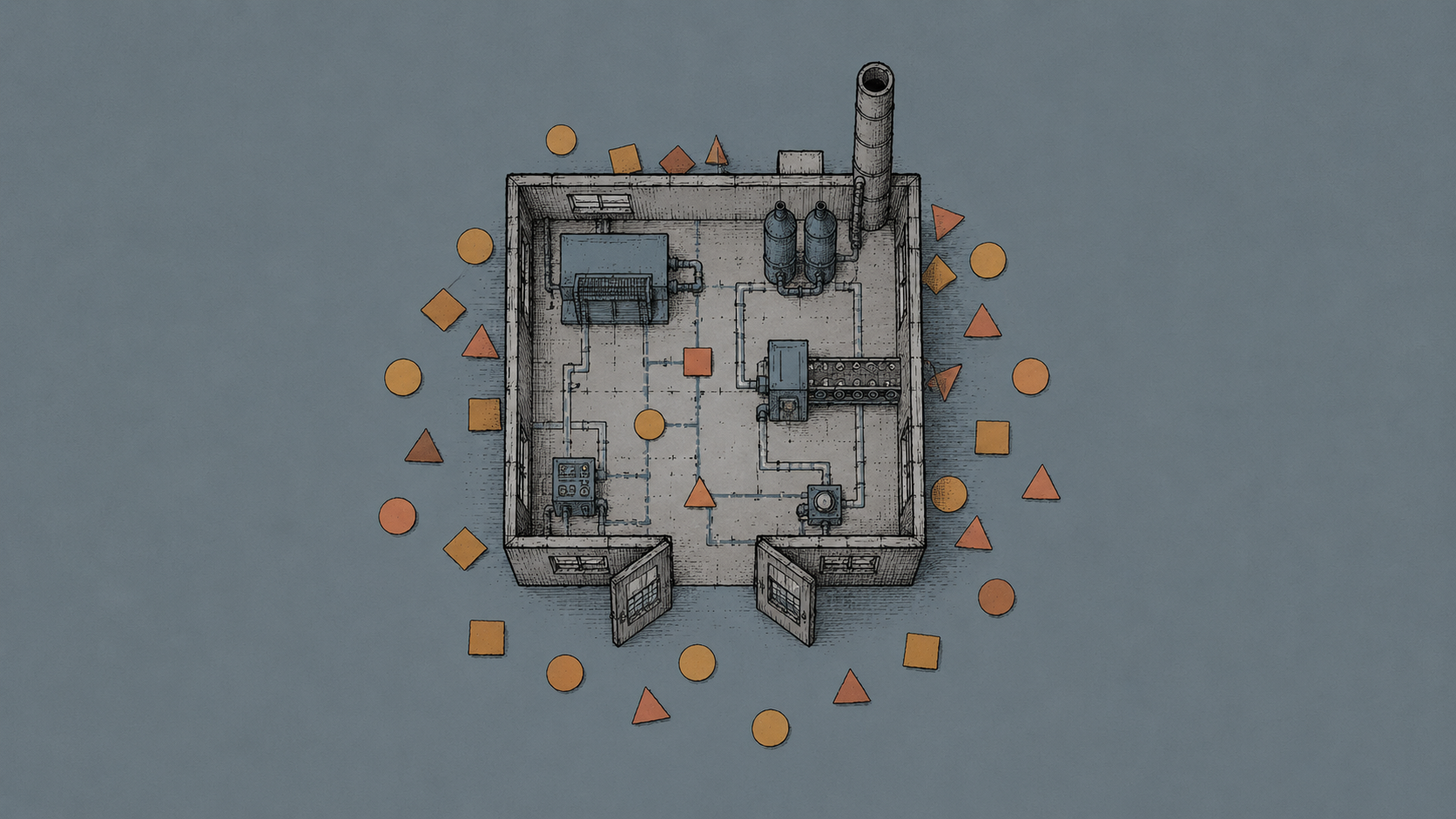
Remember a time when we had big server rooms in offices? 25 years ago enterprise software lived in server rooms. Big physical machines humming in corporate basements and they looked like this.


Then, the Cloud Revolution Happened.
Companies like Salesforce, Workday, ServiceNow and hundreds of others made on-premise servers look slow, expensive and even absurd. Within a decade, the question shifted from ‘Should we move to cloud? To ‘Why haven’t you already?’.
Now the cloud + software that won the battle is facing its own version of the same revolution with Agentic AI. SAAS has started to look slow, expensive and even a bit absurd.
What actually happened?
At its developer conference in San Francisco earlier this year, Salesforce announced something they called Headless 360. The name is technical. The idea is simple: everything Salesforce can do — every workflow, every data record, every business rule — is now accessible via an API to AI Agents. No human needed to click through menus and to access data.
Salesforce co-founder Parker Harris put it as plainly: “Why should you (humans) ever log into Salesforce again?”
Here is an example, if a company had to dig the ground to lay a foundation for a construction –
- 25 years ago, Companies had to buy shovels and digging equipment to get work done (On-Premise servers).
- Next came a time when companies could just rent the shovel and digging equipment (On – cloud). They did not have maintain the shovel, get it repaired etc. They just paid for usage. Of course, their employees still had to do the digging.
Now with Agentic AI, companies no longer need to rent the shovel and in many cases not have their employees dig too. They can just pay for the final outcome of having the ground dug up. Agentic AI is able to identify the best way to dig and get it done even before any employee has come to work.
The people who saw it coming
The Salesforce announcement is not new. Many people saw this change coming and even implemented it. Jason Lemkin, one of the most respected voices in the SaaS world, didn’t wait for a conference announcement to say this out loud. His own company runs an AI Agents for Marketing and Customer Service. They read and write the CRM continuously. His human employees barely log in. “The agentic future isn’t coming,” he wrote. “It’s here. And leaders who wait lose 12 to 18 months of compounding advantage.” The takeaway here is that every other SAAS vendor has a max of 12-18 months to respond. Headless model will become the new default.
Satya Nadella, CEO of Microsoft, probably predicted this much earlier in 2024 – where he said “business applications that are a bunch of databases with a bunch of business logic will collapse….The agent will orchestrate across multiple SaaS applications“. The SaaS model as we know it—where humans log into specific, siloed dashboards (like a CRM or HR tool) to manually click buttons—is becoming obsolete.
This change is reflected in the money trail as well!
We all have bought software based on number of users some point. This seat-based pricing — the model where companies pay per employee who uses a tool —according to Bain’s B2B report has dropped from 21% to 15% of the market in just twelve months. Gartner projects that by 2028, at least 40% of enterprise software spend will have shifted away from seat-based models entirely. IDC predicts that by 2028 – pure seat-based pricing will be obsolete.
In case you want to understand this better – Pranav Pathak at Builder Lab has a useful explainer on the revenue models for SAAS companies here.
The question nobody is asking out loud
Yes, Technology has moved ahead in leaps and bounds. Yes, the money is following technology as you can see from the revenue and projections. But what about the employees? How will they manage this transition where they no longer need to operate the software to create outcomes??
When the software stops needing you, what are you for?
This is where most technology transformation conversations go quiet. Not because the technology is too complex, but because the human question is too uncomfortable.

Our hypothesis is, most business leaders assume the announcement is the change. A platform goes live, a feature gets deployed, new technology is rolled out. However change and transition takes months/years and consistent effort.
William Bridges, one of the most important thinkers in organisational change, drew a distinction that most leaders never make. He separated change (the external event) from transition (the internal psychological journey) people go through in response to it.
Change is situational. Transition is psychological. You can flip a switch on a platform in a day. It takes far longer for people to let go of who they were before.
Most transformations fail not because the technology doesn’t work, but because leadership manages the change and ignores the transition. They deploy the software and declare victory. Meanwhile, employees are still running their own version of the pipeline report/other reports on the side, in good ol’ excels. Not because they don’t trust the agent or AI. Because they haven’t yet figured out who they are without making the report.
And this is where loss aversion enters the picture. Psychologists Daniel Kahneman and Amos Tversky found that people feel losses more intensely as gains.
Telling an employee that the agent will save them three hours a week is useful. But it won’t get them to whole heartedly adopt the new technology. That is because the unspoken loss, of the visible proof of their competence, of the thing that made them feel on top of things, that loss is more intense (than the gain of productivity).
Leaders who frame agentic AI purely as efficiency gain will keep being surprised by the friction they encounter. The loss needs to be acknowledged before the gain can be accepted and enjoyed.
This isn’t about technology. It is about identity. And it is a part of the transformation that often gets ignored.
Every big shift has done this
This has happened with every technology transformation. Humans have had to re-craft their identity time and again. When a core skill ,the “thing” you are known for gets automated, it does not just change your workflow. It changes your identity, the narrative you tell yourself.
Think of accountants when calculators and spreadsheets became common. The ‘thing’ they were good at (mental calculations) was automated. It did not just change their workflow. They had to create new identities for themselves. They stopped being the person who enters and calculates the data, and became the person who decides what the data means.
Think of travel agents in the early 2000s. Earlier they were information brokers. they had access to fares, routes, and availability that ordinary people did not. When Expedia and booking.com made that access available to all, their core value proposition evaporated overnight. The ones who thrived were those travel agents who rebuilt their identity as experience curators — specialists in complex itineraries, luxury travel, or niche destinations where human judgment, relationships, and taste still mattered. Identity moved from information access to curation and care.
The pattern is always the same. The technology arrives faster than the identity and narratives can adapt. The people who thrive are not those who resist, or those who blindly automate everything. They are the ones who move up the value chain .
So what do you actually do?
The question for every organisation right now is the same: are you actively helping your people make that move? Or are you simply deploying the technology and hoping they figure it out?
The organisations that will come out ahead are not the ones that move fastest. They are the ones that bring their people with them. Leaders who help employees recraft their identities by redefining what they value, is a good place to start.