Share


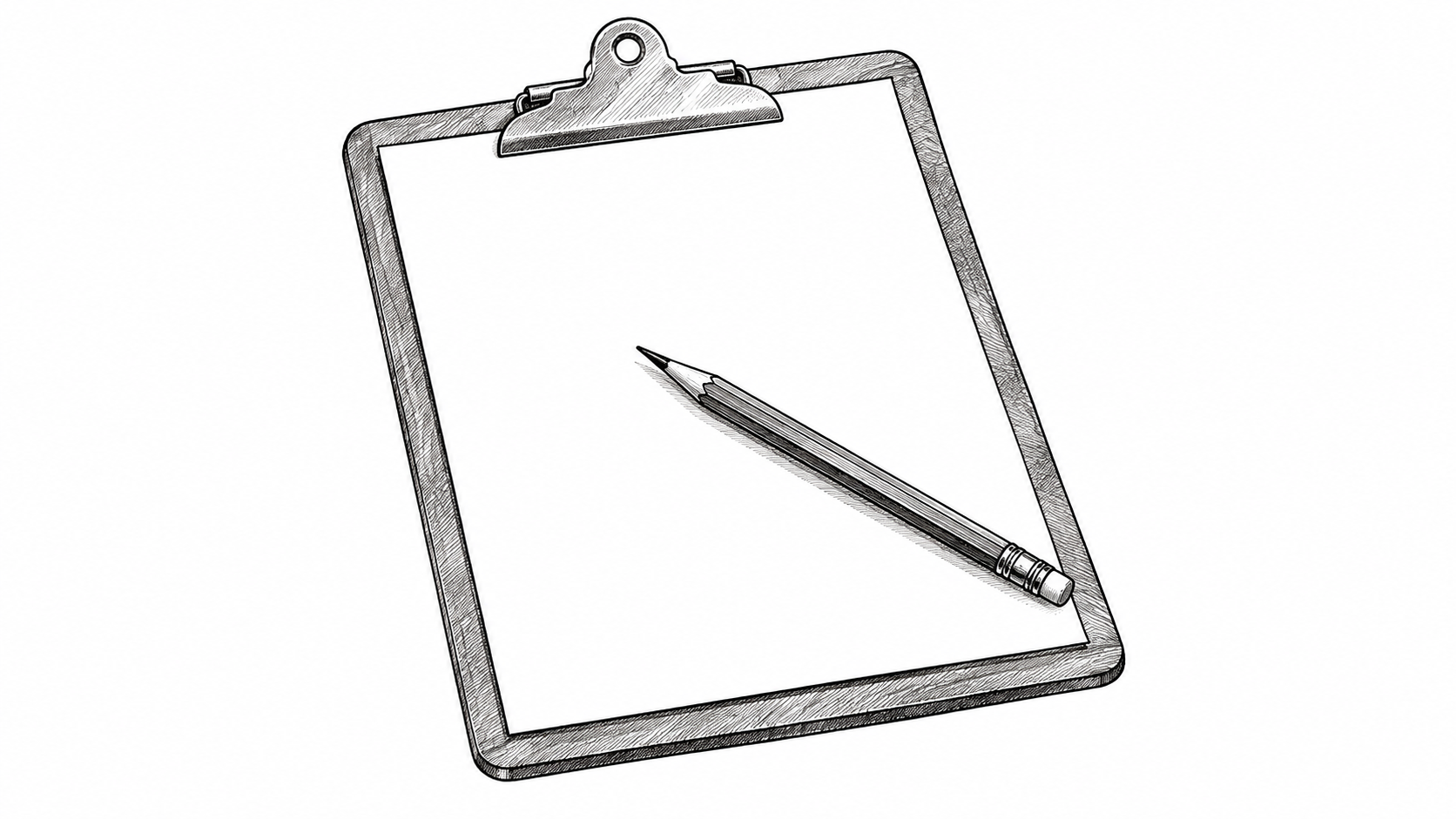
In 1950, at the Massachusetts Institute of Technology, a psychology class was told a guest lecturer would be joining them. Before he arrived, students received a short note about him. Half the class read that he was “a rather warm person.” The other half read an identical note with one change: it described him as “rather cold.”
The lecturer walked in, led the same twenty-minute discussion with both groups, and left. Students who had read “warm” rated him as more considerate, more sociable, more humorous, and more humane. Students who had read “cold” found him formal, unsociable, and self-centred. Same person. Same room. Same twenty minutes. One word, buried in a paragraph of biography, had rewritten everything.
Harold Kelley, the psychologist who designed that classroom experiment, was testing a claim that another researcher had published four years earlier using a far simpler setup, one that used no living person at all.
The paper that started it
Solomon Asch was born in Warsaw in 1907, emigrated to New York at thirteen, and learned English by reading Dickens. He studied at Columbia under Max Wertheimer, one of the founders of Gestalt psychology, the school that insisted the whole is different from the sum of its parts. In 1946, now at the New School for Social Research, Asch published a paper called “Forming Impressions of Personality” that would shape how psychologists think about first impressions for the next eighty years.
The method was elegant in its spareness. Asch read participants a list of seven adjectives: *intelligent, skillful, industrious, warm, determined, practical, cautious.* He then asked them to write a description of the person those words depicted. A second group heard the same list with one substitution: “cold” replaced “warm.”
That single word transformed the impression. Participants given “warm” described someone generous, wise, happy, and good-natured. Those given “cold” described someone calculating, unsympathetic, and humourless. Asch then ran the experiment again, swapping “polite” and “blunt” instead. This time, the overall impression barely shifted.
The conclusion: some traits are *central*, meaning they reorganise how every other trait in the list is understood. Others are *peripheral*, absorbed without altering the whole picture.
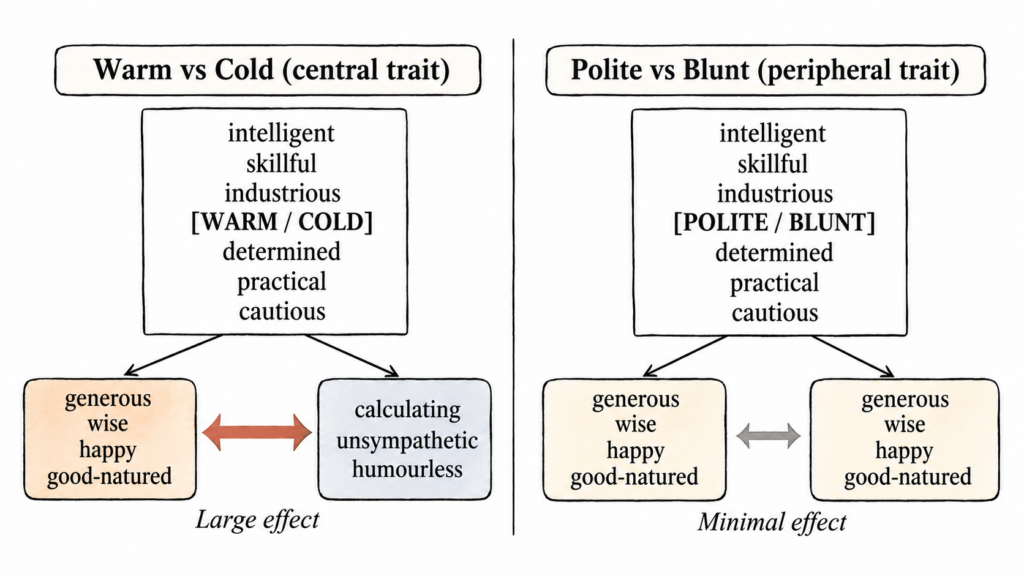
One word changed, everything changed. Asch’s 1946 experiment showed that swapping “warm” for “cold” rewrote the entire impression, while swapping “polite” for “blunt” barely moved the needle.
Across ten experiments with 834 participants, Asch also demonstrated what is now called the primacy effect. He gave one group a person described as “intelligent, industrious, impulsive, critical, stubborn, envious,” with the positive traits first and the negative ones last. A second group received the exact same six traits, in the opposite order: “envious, stubborn, critical, impulsive, industrious, intelligent.” The traits were identical. Only the order changed.
The first group judged the person as capable and ambitious, someone whose flaws were minor. The second group judged the same person as emotionally unstable and difficult, someone whose intelligence only made them more dangerous. The early words set a frame, and everything that followed was read through it.
What the theory actually claimed
Asch was not saying that we are irrational, or that first impressions are simply stubborn. His argument was subtler, and rooted in Gestalt thinking. Each trait, he proposed, changes meaning depending on the traits surrounding it. “Stubborn” in the company of “intelligent” and “industrious” reads as determination. The same word after “envious” reads as pettiness. We do not add traits up like items on a bill. We build a unified portrait, and one central trait can act as the organising principle for the whole.
This is worth dwelling on, because it is the part most often lost in translation. The popular version, *first impressions stick*, misses Asch’s actual point. Impressions are not sticky. They are *structural*. One piece of information does not merely arrive first. It reshapes the meaning of everything that arrives after.
A theory tested, complicated, and enlarged
Kelley’s 1950 classroom study carried Asch’s finding from paper lists into a living encounter, and the effect held. Wishner, in 1960, offered a sharper explanation of why some traits qualify as central: a central trait, he showed, is one that correlates with many of the other traits being judged. “Warm” was central in Asch’s study because it predicted sociability, humour, and generosity, traits that appeared on the checklist participants used. Change the checklist, and a different trait becomes central. Centrality was not a fixed property of warmth itself. It was a property of the relationship between the trait and the judgement being made.
Norman Anderson, across two decades of work culminating in his 1981 information integration theory, challenged Asch’s Gestalt framework more directly. Impressions, Anderson argued, were not holistic restructurings. They were weighted averages. Each trait carries an evaluative score, and people combine these scores through a kind of mental arithmetic. The primacy effect persisted in Anderson’s model, explained by earlier information receiving higher weight in the averaging process.
A 2014 replication by Nauts and colleagues at Radboud University found no evidence for a primacy-of-warmth effect specifically. The role of warmth was highly context-dependent, and competence-related traits shaped impressions at least as strongly. Asch himself had noted this possibility: in his Study IV, when the surrounding traits changed, “warm” became peripheral. No trait was central by design.
The deeper finding, though, has only grown stronger. Susan Fiske, Amy Cuddy, and Peter Glick proposed in 2007 that warmth and competence are the two universal dimensions of social judgement. These are the axes along which we evaluate every person and every group we encounter. Warmth answers the survival question: *what are their intentions?* Competence answers: *can they act on those intentions?* Fiske’s framework, tested across dozens of cultures, is a direct descendant of what Asch found with seven adjectives and a clipboard in 1946.
The pattern since
In 2006, Willis and Todorov at Princeton showed that people form trait judgements (trustworthiness, competence, likeability) after seeing a face for just one hundred milliseconds. A tenth of a second. More time increased confidence in the judgement without changing the judgement itself. The architecture Asch described on paper, where one early impression organises everything that follows, now operates faster than conscious thought.
The halo effect, Edward Thorndike‘s 1920 term for the tendency of one salient positive trait to inflate ratings of every other trait, is among the most replicated findings in applied psychology. It appears in hiring interviews, where research consistently shows that interviewers reach a judgement within the first few minutes, and that the remaining forty-five minutes serve mainly to confirm it. It appears in performance reviews, where one strong quarter can inflate ratings across every competency, and one visible failure can drag them all down. It appears wherever a reference letter’s opening sentence does most of the work, and wherever a confident handshake writes the first line of a story the rest of the interview merely illustrates.
In Australian and Indian workplaces alike, the structured interview (standardised questions, scored independently per competency, calibrated across assessors) remains the most reliable defence against the halo effect. And it remains, in most organisations, the exception rather than the rule.
What a leader can do with this
The next time you read a reference or sit across from a candidate, pay attention to the moment the portrait assembles itself. It will happen early, probably in the first sentence of the letter or the first minute of the conversation. It will feel like perception, like you are simply seeing who they are. You are n
ot. You are constructing, and the first brick you lay determines the shape of the building. Asch’s quiet contribution was to show that this is not a failure of attention or discipline. It is how impression formation works.
The useful question is not “did I form an impression too quickly?” You did. Everyone does. The useful question is: “which trait is acting as the central one, and would a different trait in that position produce a different building entirely?” Asch showed that the answer is almost always yes. Move one brick and the whole structure changes. That is both the problem and the way out of it.
This is the eighteenth in a series on research that changed how we understand organisations and the people inside them. Each instalment covers one paper or study, and asks what a working leader might do with it. The work comes from management, organisational behaviour, sociology, and psychology. The selection criterion is simple: it has to have been right about something important, and mostly ignored in the places that needed it. The previous piece on loss aversion is here
You May Also Like
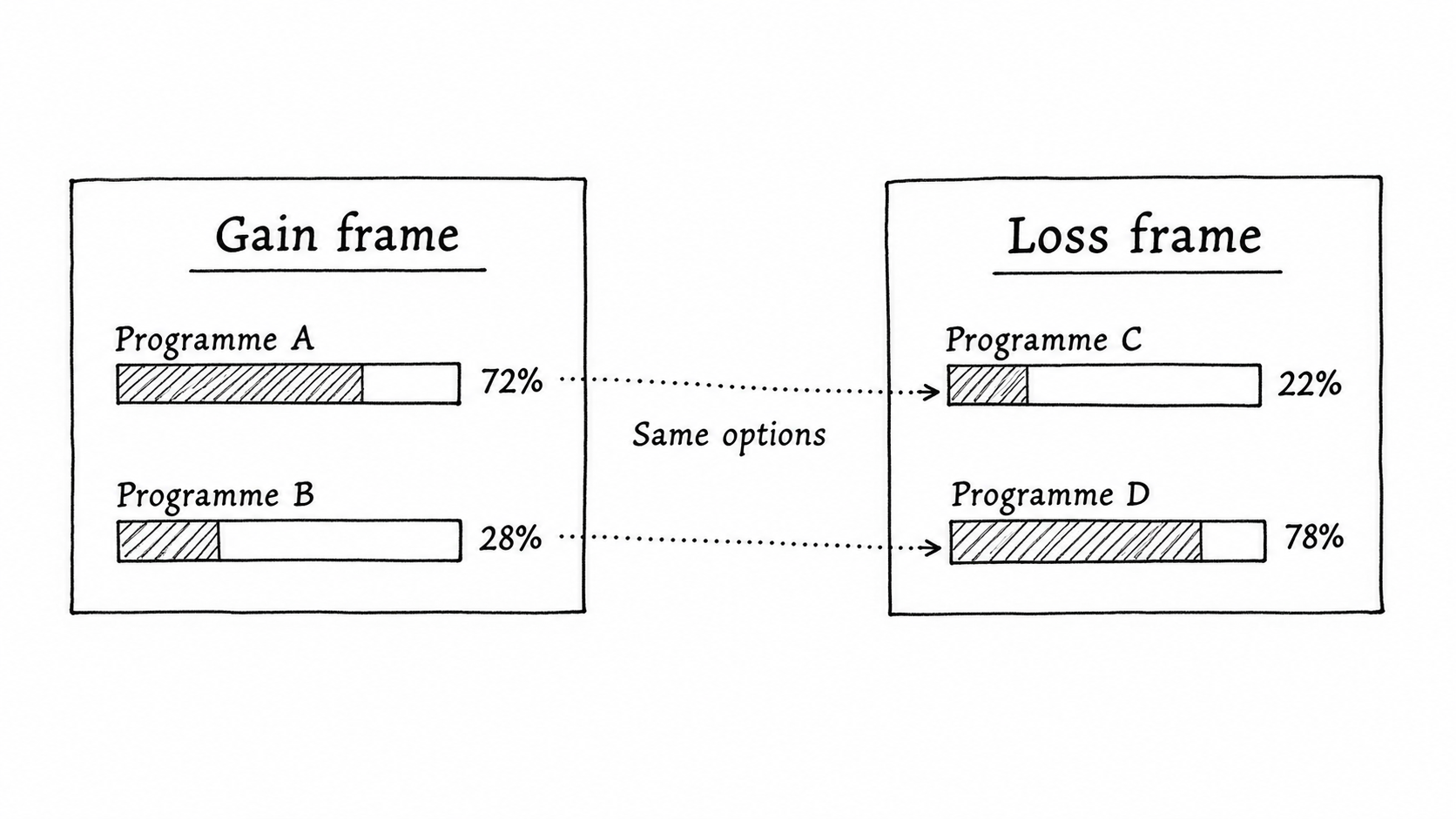
On the Evidence — Loss Aversion
When pension saving is opt-in, about sixty per cent of...
read more
Transitions & Adoption Can Be Messy With Double Work
Most wont people won't admit this! The bridge between the...
read more
Everyone Watches The Early Adopters
Every tool on your desk today was once somebody's awkward...
read moreEmail You’ll Actually Read
Subscribe to the OWL Despatch, a fortnightly curated newsletter at the intersection of our emerging future, change and modern workplaces. We wont spam, we promise.