Share


Most people have a category of contact they don’t quite know what to call. Not a friend. Not really a colleague. Someone they like, know reasonably well, and almost never speak to. A former manager. Someone from a conference. A person they worked with briefly, years ago, somewhere else. Most people, if pressed, would call these contacts peripheral. The research suggests they might be the most valuable ones in the network.Mark Granovetter called these weak ties. In 1973, he published a paper that would become one of the most cited in all of social science. The idea at the centre of it was simple, a little surprising, and almost universally ignored by the organisations that needed it most.
The finding
Granovetter wanted to know how people find jobs. He interviewed hundreds of workers in the Boston area and asked them how they’d heard about their current position. Almost always, the answer was through someone they knew.
That part wasn’t surprising. The surprising part was who.
It was almost never a close friend. It was almost never a trusted colleague. It was, again and again, an acquaintance. Someone on the edges. Someone they didn’t see often, didn’t call regularly, didn’t think of as a central relationship.
Here’s why that matters. Close relationships cluster. Your good friends tend to know each other. Your work colleagues talk to each other. The information inside those groups moves around, bounces off the same walls, and mostly stays put. What one person knows, the others tend to know too.
Weak ties reach somewhere else. The person you know loosely lives in a different world, different job, different industry, different set of conversations. They hear things you don’t. They know people you’ve never met. They carry information that your close circle simply doesn’t have.
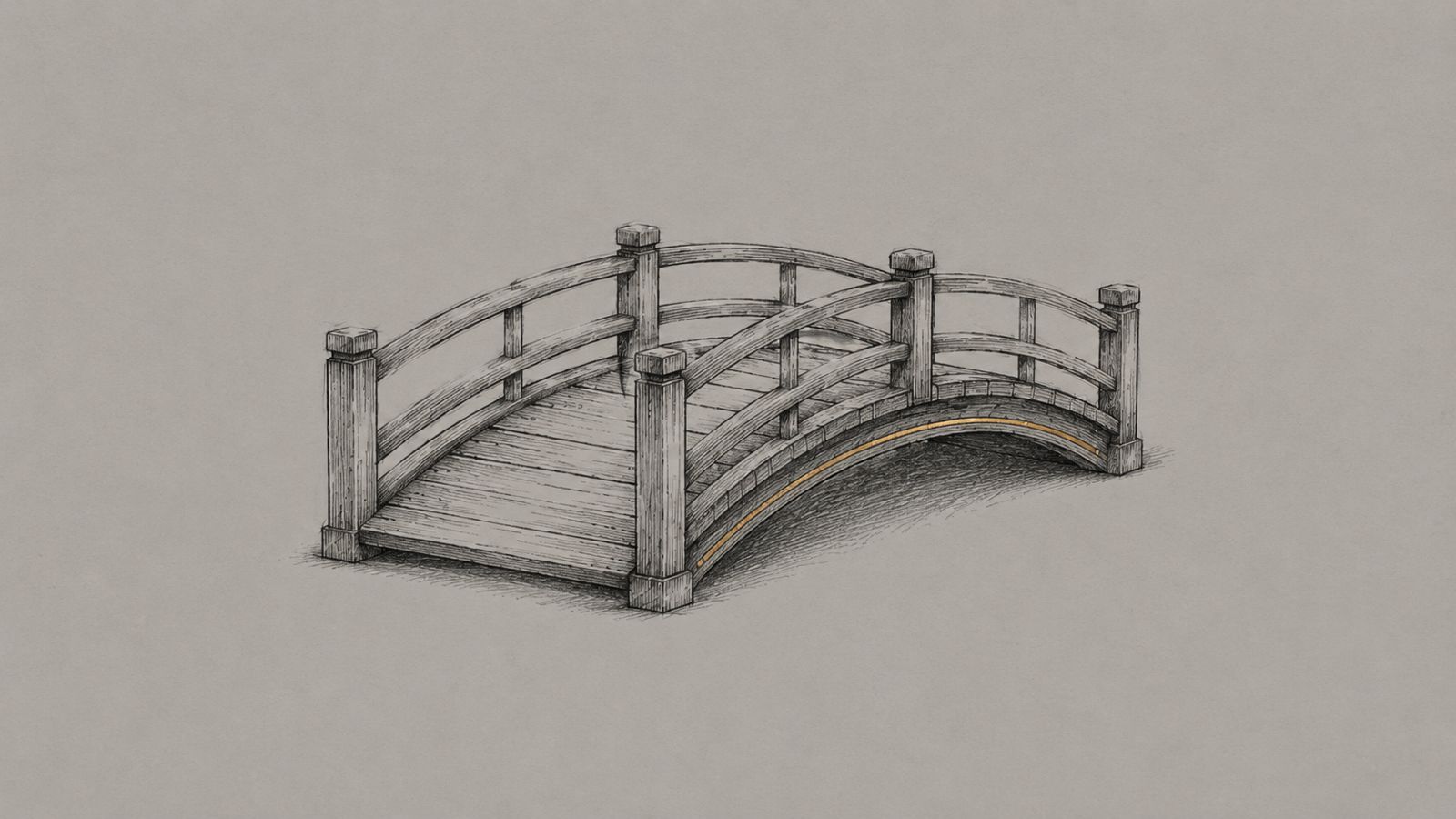
Weak ties, Granovetter said, are the bridges. And without bridges, networks become islands.
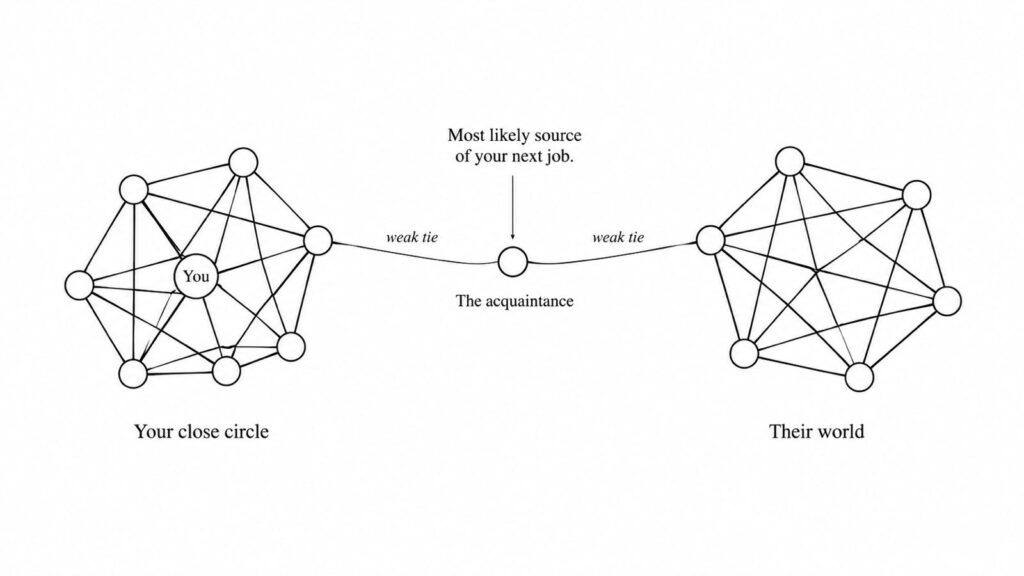
Granovetter’s theory, drawn simply. The acquaintance sits between two worlds, belonging to neither. That’s what makes them useful.You said: Image description for each
Why this matters beyond job-hunting
The career application is real. People with varied, loosely connected networks find opportunities that people inside tight clusters miss. Not because their close friends don’t care, but because caring and knowing different things are separate qualities.
The deeper point is about organisations.
Inside any company, strong ties take over. Teams form. Departments develop their own language, their own assumptions, their own way of seeing things. This is useful. Trust and familiarity get work done. The problem is what gets lost.
Information inside tight groups recirculates. The same ideas come back around. Problems that live at the edge of two departments, the kind that need someone to carry knowledge from one side to the other, go unsolved because nobody is making that crossing.
Social media promised to fix this. LinkedIn gave everyone five hundred connections. The weak tie, it seemed, had been industrialised. Except it hadn’t. What platforms built were connections in name only, people you’re linked to but rarely hear from. Worse, the algorithm buries them. It surfaces the people you already talk to, the content you already agree with, the cluster you already live in. You have more contacts than ever and roughly the same information you always had.
The person who bridges two worlds, who carries ideas across, who translates between groups, who knows people on both sides of a gap, is doing something genuinely valuable. It just rarely shows up on any organisation chart.
What a working leader might do with this
Most organisations invest in strengthening what they already have. More team-building. Deeper relationships. Better internal communication. Fine. And alongside that, it’s worth asking a different question: where are the gaps, and who is crossing them?
Look around. Who in your organisation talks to everyone? Who gets called when someone needs to reach a part of the business they don’t normally deal with? Who moves between worlds without making a fuss about it? These people are doing structural work that is nearly invisible and almost never recognised.
Then look at your own network. The people you trust most, talk to most, rely on most, they matter. They also probably know what you know. The contact you’ve been meaning to reach out to, the person from a different field you got on well with, the former colleague you think about occasionally and never call, these aren’t peripheral relationships. They’re the bridges.
Granovetter was studying job markets in 1973. He was also describing something more fundamental: how ideas travel, how opportunities surface, and how organisations either stay open to the world or quietly close themselves off from it.
The strong ties hold you in place. The weak ones move you forward.
This is the third in a series on research that changed how we understand organisations and the people in them. Each post covers one paper or study, clearly described, and what a working leader might do with it. The work comes from management, organisational behaviour, sociology, and psychology. The selection criterion is simple: it has to have been right about something important, and mostly ignored in the places that needed it. Previous post is here.