Share


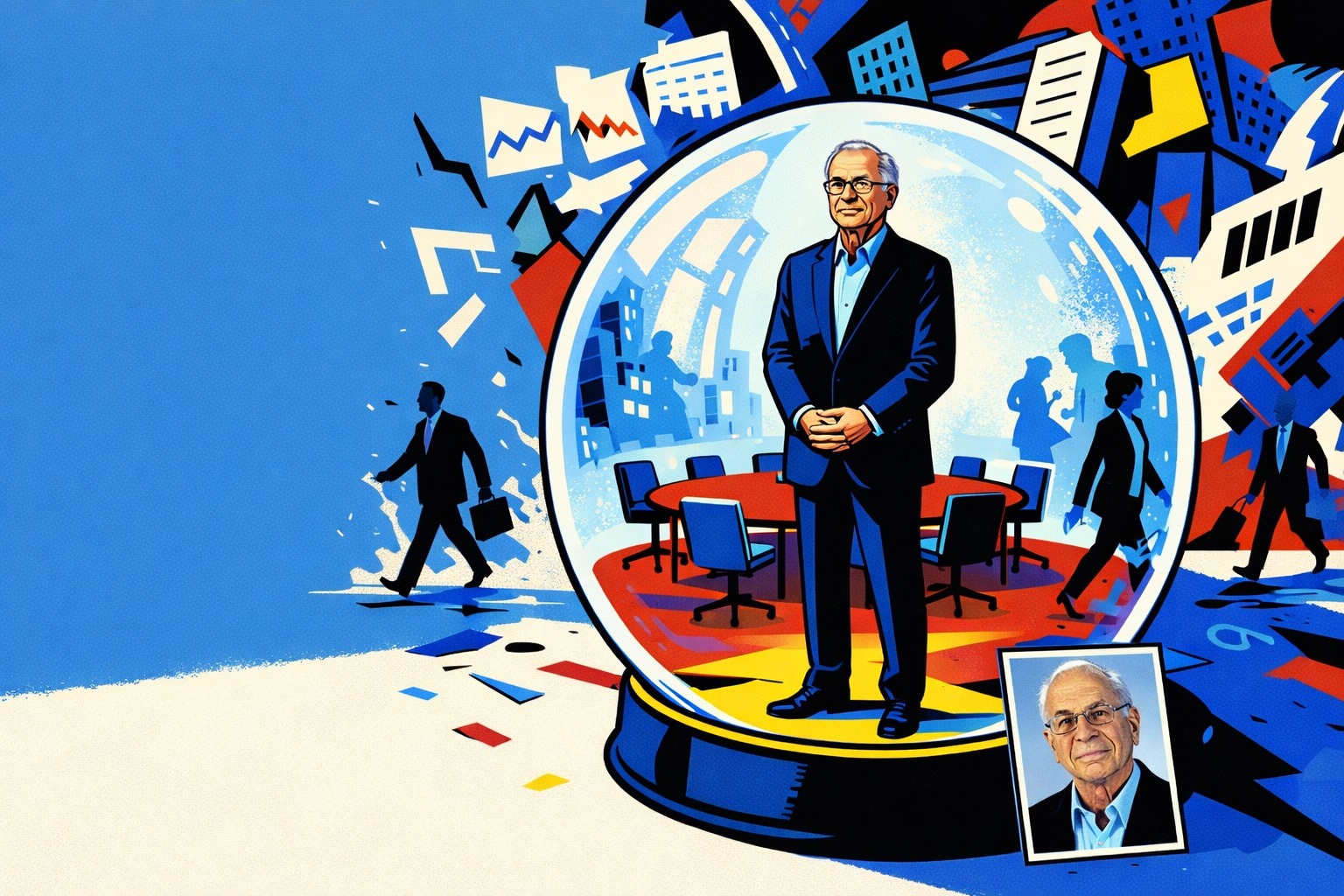
Picture this. A leadership team receives the results of a major employee survey. Engagement is down. Trust in senior leadership is down. Willingness to speak up is down. The data is clear, well-presented, and professionally uncomfortable.
“I think people are just tired from the restructure.”
Nobody disagrees. The survey is set aside.
The restructure was the CEO’s idea. The survey was now telling him it had caused harm. That was too uncomfortable. So, without quite realising it, he found a different explanation. One that let him off the hook. He was not lying. He genuinely believed what he said. That is the unsettling part.
Daniel Kahneman spent sixty years explaining why this happens. He called it motivated reasoning. We do not look at the evidence and then reach a conclusion. We reach a conclusion first, usually without knowing it, and then use the evidence to confirm what we already believe. Two years after his passing, his thinking still shapes how we approach organisational change at Flyntrok.
We Remember Endings, Not Middles
Kahneman showed, in Thinking, Fast and Slow, that the mind judges an experience almost entirely by its peak intensity and its ending. Duration barely registers.
The CEO genuinely believed the restructure had gone well. It had ended with a town hall and a sense of relief. The months of friction and eroded trust in the middle had faded. The ending was clean, so the memory was clean.
Every change programme has a launch and a closing event. The launch generates energy. The closing generates relief. Then the programme team disbands, the slide decks are archived, and nobody is watching. That is when things begin to unravel. The remembering self has already filed it under done.
The Room Is Calculating What It Will Lose
Loss aversion is perhaps the most cited finding from Kahneman’s work with Amos Tversky. The prospect of losing something weighs roughly twice as heavily as the prospect of gaining something equivalent.
The CEO presented the restructure as a gain. Cleaner lines. Faster decisions. What the people in the room heard, quietly, was what they stood to lose. Status. Certainty. Relationships built over years. None of that was on the slides. All of it was in the room. Most change programmes are presented as gains. Kahneman’s research suggests the audience is running a different calculation entirely, and nobody is addressing it.
Confidence Is Not Accuracy
Kahneman called it the planning fallacy: the near-universal tendency to underestimate how long organisational change will take and how much turbulence will follow. Experts are not more accurate. They are more confidently wrong.
The CEO believed the restructure would land faster and cleaner than it did. He was working from his own read of the organisation, his own instincts. What he did not ask was: what actually happens when other organisations go through restructures like this one? Kahneman called that the outside view. Most leaders find it deflating. The inside view is more interesting, more personal, and considerably less accurate.
What He Gave Us
Kahneman’s gift to anyone leading organisational change is not a checklist. It is a disposition: to be genuinely curious about why people do what they do, and to hold your own confident judgements with a little more scepticism than feels comfortable.
The CEO in that boardroom was not unusual. He was entirely predictable, in the precise sense Kahneman meant. The patterns that led him to dismiss the survey, misremember the restructure, and overlook what his people feared losing are not character flaws. They are features of how all human minds work under pressure. Including those of us who have read Kahneman and know better.
At Flyntrok, the concept we return to most often is interpretive capacity: the ability of an organisation to make meaning from new information well enough to act differently. Kahneman’s work is a prolonged investigation into why that fails, and how reliably it fails even in people who know better. His answer was not comforting. But it was honest. And that is exactly what makes it useful.