Share


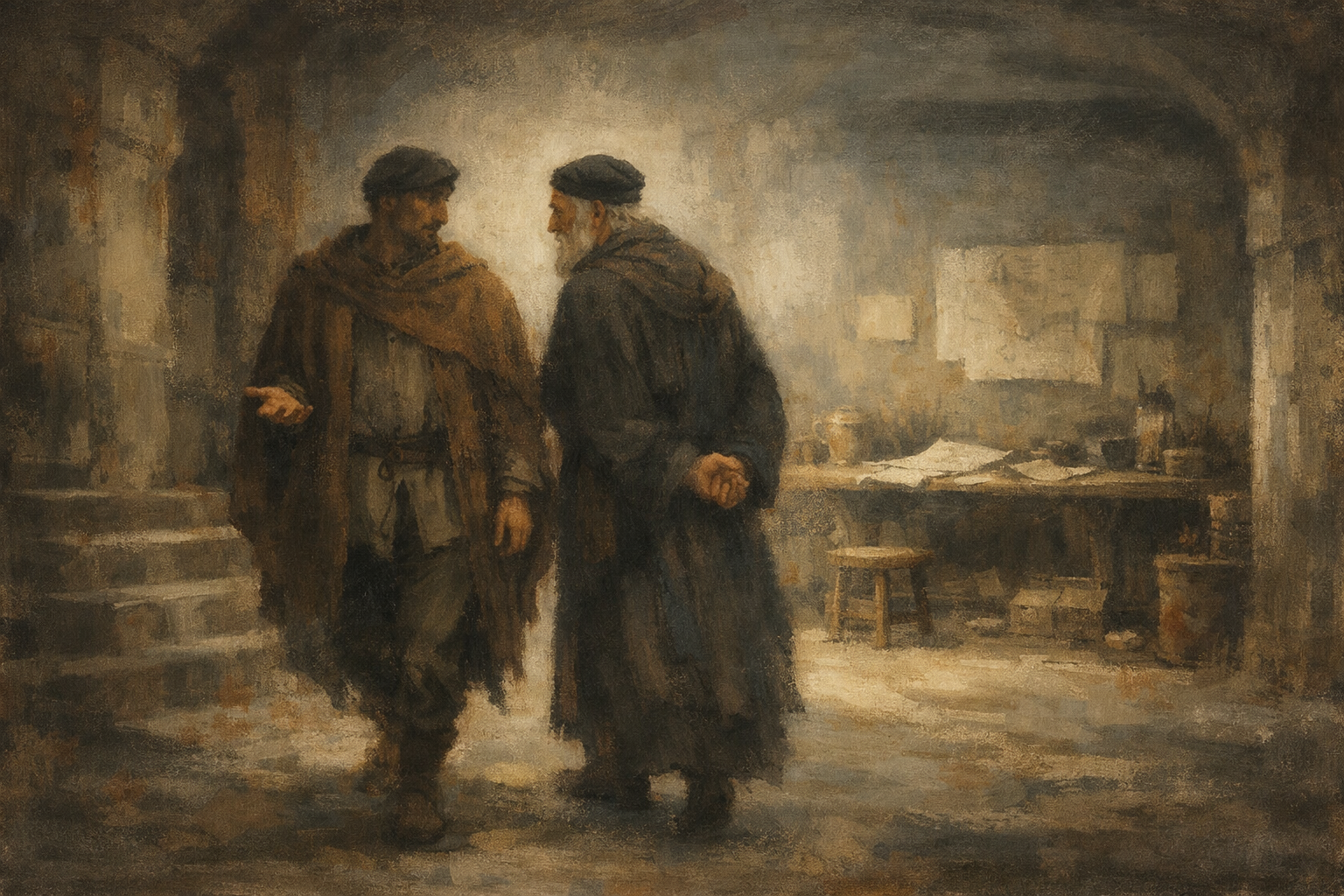
The leader rubbed his temples.
“Everyone wants something different,” he said. “The stewards want order. The guild masters want speed. The younger ones want freedom. The elders want stability. They all look at me as if I am the problem.”
The Elder smiled. He had seen this before.
“My lord,” he said, “that is because you are standing in the middle. Which is precisely where you belong.”
The leader frowned. “They tell me I must decide. Choose a direction. Be firm.”
“Yes,” said the Elder gently, “and a bridge must choose which riverbank it prefers.”
“So I am a bridge now?” the leader asked.
“You always were,” said the Elder. “You simply thought you were a tower.”
On Control and Letting Go
They walked on, boots echoing against stone.
“How do I give freedom without chaos?” the leader asked. “Discipline without fear? Care without becoming soft?”
The Elder stopped. “By understanding that these are not choices,” he said. “They are tensions. And tensions are meant to be carried, not solved.”
He picked up a small stone and weighed it in his hand.
“When the kingdom is threatened, people look to you for firmness. Rules calm fear. Structure gives sleep. But when peace lingers too long, the same rules become chains. Then they look to you to loosen your grip.”
“So when do I change?” asked the leader.
“When the cost of holding becomes greater than the risk of letting go,” the Elder replied. “And when you change, explain it. Otherwise people will think you have abandoned your beliefs rather than adjusted your timing.”
Inside the Walls and Beyond Them
They resumed walking.
“And what of my people versus the world beyond our walls?” the leader asked. “If I listen too much inward, we fall behind. If I chase every external demand, the court grows weary.”
The Elder nodded. “Then you must become a translator,” he said.
“Speak of the world’s pressures in human language. Speak of human limits in the language of trade and survival. If you stop translating, each side will think the other cruel or foolish.”
Results and Relationships
The leader sighed. “And results?” he asked. “They accuse me of caring too much. Or too little. Sometimes on the same day.”
The Elder chuckled. “Results without relationships burn bright and die fast. Relationships without results turn warm and stagnant. Do not treat them as rivals. Treat them as seasons. There is a time to push and a time to tend.”
What Must Be Done Tomorrow
They reached the courtyard. The sun was lowering.
“So tell me plainly,” said the leader. “What must I do tomorrow?”
The Elder raised his hand.
“First,” he said, “notice where you are most comfortable. Control, harmony, speed, or novelty. Then practise leading from the place that makes you uneasy. Range matters more than preference.”
“Second, separate belief from posture. Changing how tightly you hold does not mean changing what you stand for. Say this aloud, often.”
“Third, translate without tiring. If you grow weary of explaining, confusion will take your place.”
“Fourth, design rooms where opposing views are expected.”
“Rooms?” asked the leader.
“Councils. Rituals. Conversations,” said the Elder. “If you do not make space for tension, it will show up as gossip and resistance.”
“And the fifth?”
The Elder smiled. “Let them see that being pulled in many directions is not a weakness. It is the work. When you carry it calmly, others will walk steadier.”
Not Failure. Governance.
The leader stood quietly for a moment.
“So I am not failing,” he said.
“No,” said the Elder. “You are governing.”