Share


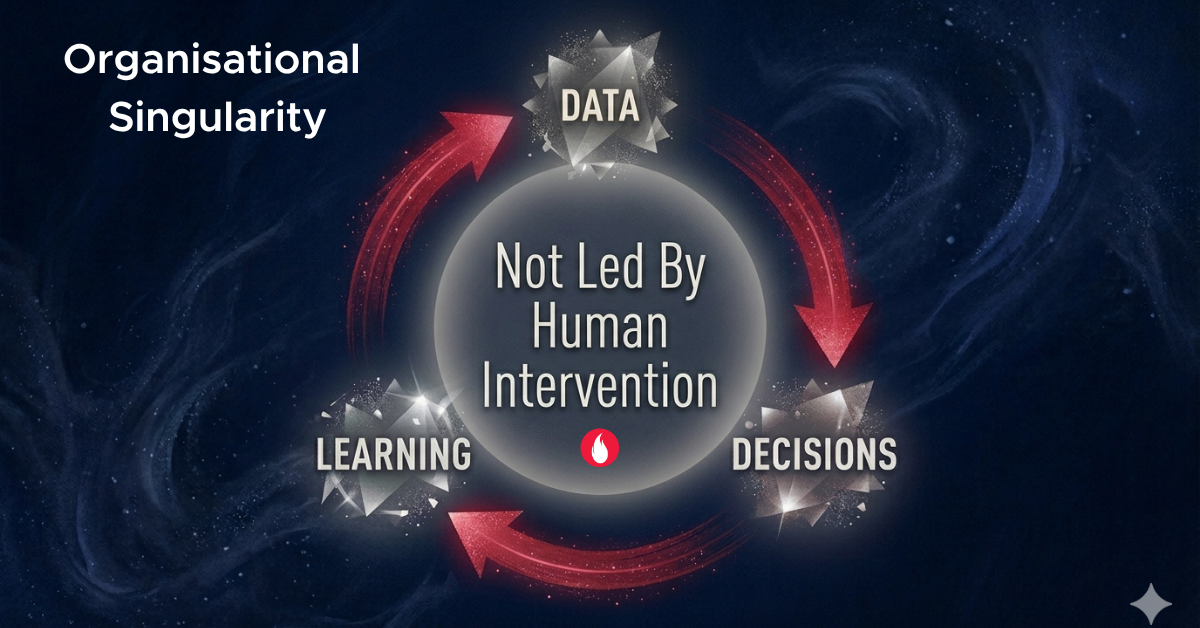
In our last piece we introduced Organisational Singularity. The point at which an organisation’s AI shifts from tool to nervous system. Learning and improving continuously without waiting for human direction.
One responder asked, can you explain this to a 5 year old? Because that is a true proof of understanding.
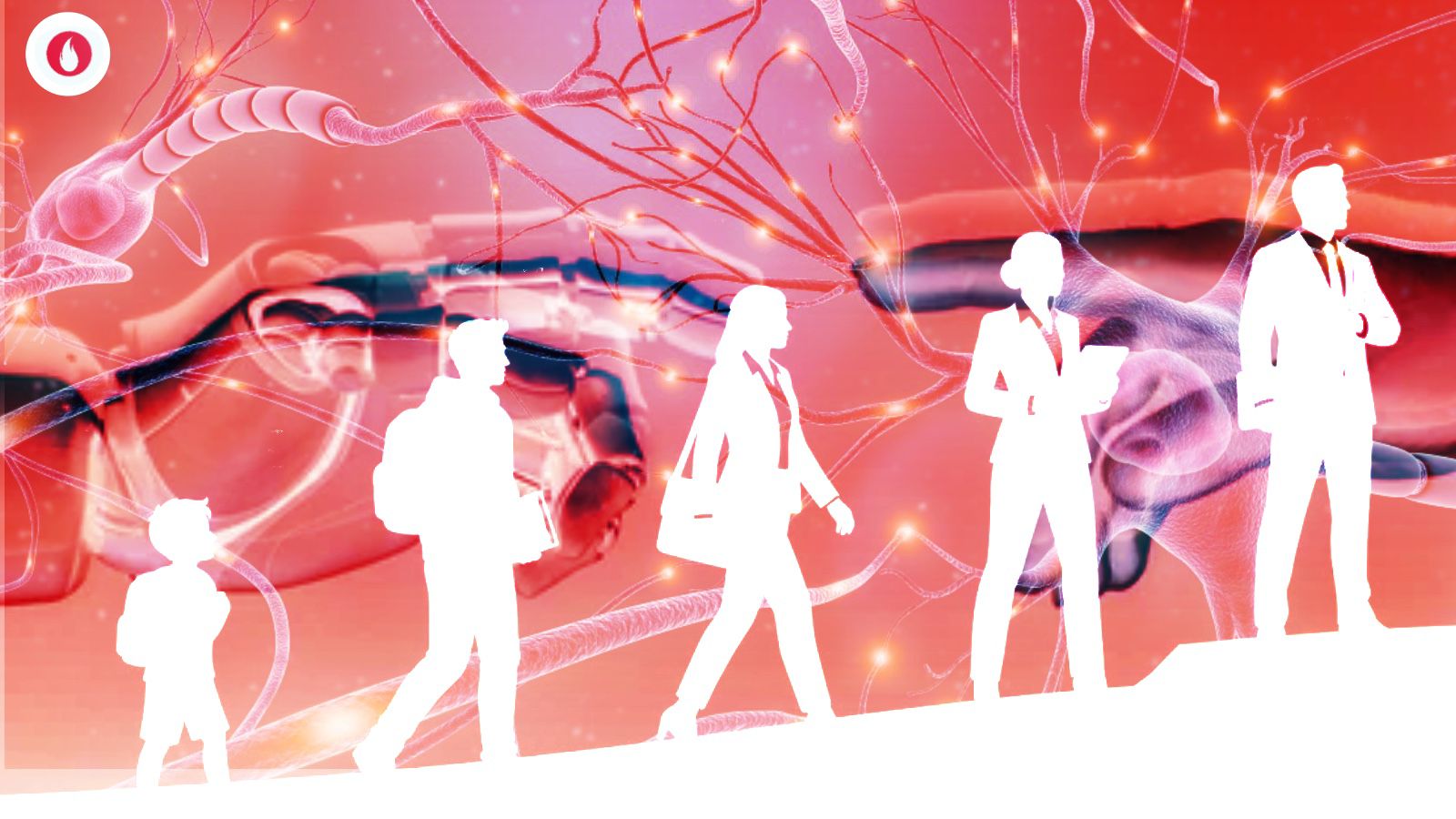
We took the challenge further. So here it is. The same idea of Organisational Singularity, explained to 5 different groups – a five year old, a college student, a new hire, an L&D Head and a CEO.
To a 5 Year Old
You know how you get better at drawing the more you practice? You draw something, your teacher gives you a few more ideas and you try again. It comes out a little better each time.
Now imagine a whole school that did that on its own. Every classroom, every teacher, every lesson — all learning from each other at the same time. A student and teacher both learn through every practice in the school, not just from their own class.
That’s what happens when a company reaches Organisational Singularity. The whole organisation learns together — and it never stops practicing.
What you can try now to be ready for Singularity:
Keep practicing your drawing. Because the companies of the future will still need people who create things, imagine things, and care about things. The machines get better at remembering. You get better at wondering.
To a College Student
You have probably used AI to help with an essay or summarise a paper. That is using AI as a tool — useful, but waiting for you to direct it.
Now imagine a company where AI isn’t sitting in individual laptops waiting to be asked something. It is woven into everything — connecting what the sales team learns to what the product team builds. Connecting what customers say to what operations does next. Every decision feeds the system. Every outcome teaches it something. Nobody had to schedule that learning. It just happens.
That is the difference between a company using AI and a company that has hit Organisational Singularity. One is using a very fast calculator. The other has built something that thinks alongside it.
What you can try now to be ready for Singularity:
The best thing you can do right now is run an experiment. Pick one project — academic, personal, creative, anything — and try to build a learning loop around it. Document what you learn. Feed the outcomes back in. See if the project starts improving faster than you expected. Use AI not just as a tool to complete tasks but as a system that gets better the more you feed it.
You won’t be building Organisational Singularity. But you’ll understand the feedback loop from the inside. Which is worth more than any certification when you walk into a job interview and someone asks how you work with AI.
To a New Hire
You’re in your first few weeks. You’re trying to figure out how the company works! You are trying to find where the documents and information is saved. How decisions are made, and what are some unwritten rules of the company.
Typically, organisational or Institutional memory is rarely documented or easy to find for someone new. Many a times it simply lives in the heads of the more experienced employees.
In an organisation approaching Singularity, something structurally different is happening. The institutional memory is no longer held only by people — it is alive and visible in the system itself. In these companies, AI is quietly connecting decisions to outcomes. AI is surfacing patterns no individual would notice. And feeding that learning back into how the organisation operates next time.
What you can try now to be ready for Singularity:
Pay attention to how this organisation learns. That will tell you more about its future than any strategy deck. The skills that will matter most here aren’t just execution skills. They are the ability to ask the right questions of a system that can now answer faster than any manager could.
To an L&D Head
Think about how a new employee learns today. They go through onboarding, attend programmes, shadow colleagues, make mistakes. They get feedback, and gradually build up knowledge over months and years. That learning is real — but it is individual. And it doesn’t automatically transfer to the next person who joins.
Now imagine if every lesson that employee learned — every mistake, every good decision, every customer interaction — was instantly captured. It was connected to outcomes, and fed back into how the whole organisation operates next time. Not stored in a document somewhere. Actually applied. Automatically. By the system itself.
That is Organisational Singularity. The organisation stops learning the way individuals learn. Slowly, manually, one person at a time — and starts learning the way a well-designed system learns. Continuously, collectively, and without waiting for anyone to schedule it.
What you can try now to be ready for Singularity:
This raises an uncomfortable question for the L&D function. If the organisation is already learning continuously through its systems, what exactly is your job?
The L&D function that survives Organisational Singularity is not the one with the best LMS. It is the one that understood that its real job was preparing humans for a new kind of collaboration. Every person in your organisation needs to understand — at the level appropriate to their role — how to work alongside the intelligence layer productively. This is the new organisational fluency.
To a CEO or Senior Leader
Think about why decisions land on your desk.
Rarely because someone below you lacks authority. More often because they lack the information, the context, or the judgment to make the call confidently. A regional manager escalates a pricing decision because they don’t have visibility across markets. A new hire doesn’t even attempt the decision. they have not spent enough time to know what good looks like yet.
So decisions travel upward. Your calendar as CEO/CxO is full not because you are the only one who can decide. But because you are often the only one who has enough to decide well.
Now imagine an organisation where that information problem no longer exists at any level. Where a regional manager about to make a pricing call is shown — in real time — what similar decisions produced in comparable markets. Where a new hire, is guided by a system that surfaces the institutional wisdom they haven’t had time to accumulate yet.
That is Organisational Singularity. The system doesn’t make the decision. But it arms every level of the organisation with the kind of informed context that previously only lived at the top. Decisions stop travelling upward out of necessity. They get made where they happen — faster, better, and with less dependence on any single person’s judgment.
What you can try now to be ready for Singularity:
This changes your job more than anyone else’s in the organisation. You are no longer the answer to an information problem. The system handles that. What you become is the answer to a values problem. The intelligence layer can recommend, optimise, and surface. It cannot decide what the organisation stands for. It cannot make the calls that require moral judgment, long-term thinking, or the kind of wisdom that no feedback loop can replicate. That remains irreducibly yours.
The question isn’t whether Organisational Singularity is coming. Are you building toward Organisational Singularity — or managing the bottlenecks until you can’t.
In closing
The same concept. Five different moments of recognition.
What’s interesting is that Organisational Singularity doesn’t feel the same from every seat. It feels like wonder to a five year old. Like a project to a college student. Like a mentor to a new hire. An existential question to an L&D head. And maybe a full yet different calendar to a CEO/CxO.
But underneath all five — the same shift is happening. The organisation stops waiting for humans to move knowledge around. It starts doing it by itself.