Share


As 2025 draws to a close, it is the perfect moment to pause and reflect. At Flyntrok, we believe the most valuable lessons are found in those moments of reflection. That is why we offer you our End-of-Year Reflection Series.
We have curated and invited experts across diverse fields to share their perspectives on the defining moments and trends of 2025. Each brings a unique lens to their respective areas ranging from the world of HR to leadership and research. This series isn’t just about looking back; it’s about gaining the perspective you need to make sense of a changing world and chart your course for 2026 with intention.
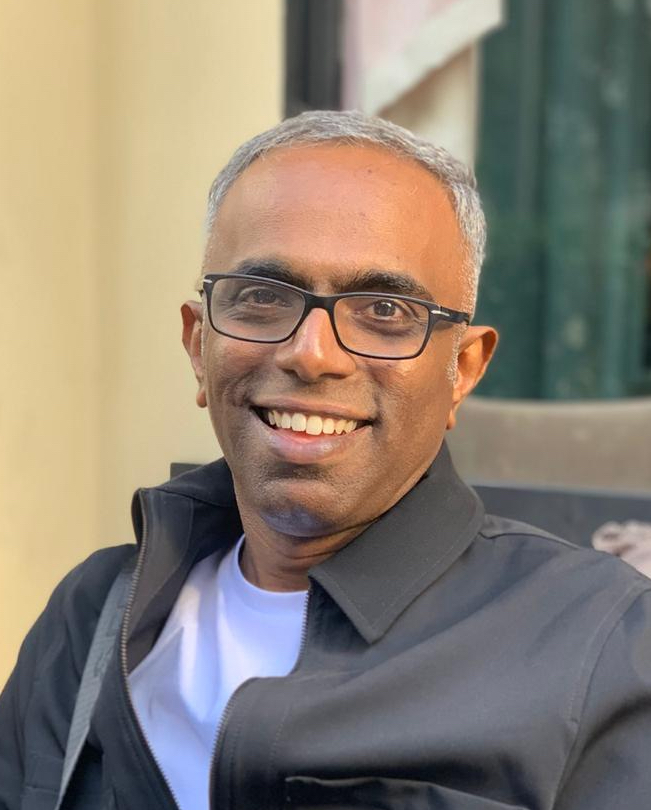
Kavi Arasu is an organisational change specialist, executive coach and writer. He brings deep expertise in helping leaders and teams navigate transformation. Kavi Arasu as Principal At Flyntrok drives change working across multiple geographies and industries. His lens on 2025 reveals something crucial: the organisations that made progress weren’t the ones with the boldest change initiatives—they were the ones that learned to define what actually needed fixing.

Over To Kavi
The Quiet Work of Leading Change in 2025
Change has always been part of organisational life. What feels different in 2025 is how crowded it has become. Too many signals arrive at once. Too many tools promise improvement. Too many initiatives compete for the same attention.
In this environment, organisations develop an itch to do something. Any movement feels better than stillness. Over time, defining the issue quietly becomes the hardest part of the work.
Across Heavy Engineering, FMCG, Shipping, Law, Insurance, Financial Services, Education, Global Capability Centers, Building Materials, Natural Resource Management, publishing, the same patterns keep surfacing.
1. Patience has been spent
People still want work to improve. They are open to experiments, especially small ones. The condition is simple. The experiment must solve a problem they are already wrestling with.
In a heavy engineering setup working through digital transformation, supervisors were happy to trial changes that reduce rework or shorten maintenance cycles. Interest fades quickly when pilots add reports, meetings, or dashboards without easing daily pressure.
In professional firms modernising processes, people engage when new practices reduce turnaround time or friction. They disengage when change arrives as an additional layer, even when it promises benefits in the long run.
Energy now flows toward ideas that reduce effort in the present. Anything that promises future elegance without present relief struggles to hold attention.
2. Change has crossed an authority threshold
There was a time when announcing change created momentum. Today it often creates questions. Usually sensible ones.
Leadership capability programmes reveal this clearly. Senior leaders are committed. Specialists are focused on outcomes. Middle managers sit in between, absorbing pressure from both sides, often with impressive politeness.
Research consistently shows that middle managers now spend most of their time coordinating, translating, and buffering work rather than driving it forward. They carry the invisible load of making sense of competing demands, usually without a formal invitation.
Change slows when this load remains unseen. It moves when organisations invest in facilitation that helps prioritise, sequence, and decide what can reasonably wait. Sometimes the most useful intervention is simply agreeing what not to do this quarter.
3. Everyday experience has recalibrated expectations
This plays out quietly every day.
People now live inside powerful, responsive technology. They plan travel, manage money, learn new skills, and solve small problems instantly. Over time, this changes more than habits. It changes expectations.
When similar tools and ideas arrive at work, those expectations travel with them. People assume progress will feel smoother, quicker, and more intuitive. Often, it doesn’t.
Disappointment sets in not because the intent is wrong, but because personal experience has raised the bar. People grow less tolerant of awkward rollouts and half-finished transitions at work.
Change efforts that meet these heightened expectations earn trust quickly. Those that fall short linger longer in memory, usually outlasting their original announcement.
4. More information has made judgment visible
Leadership teams today sit on oceans of data. Dashboards multiply. Benchmarks circulate. Analysis arrives confidently from many directions.
Decisions still feel heavy.
Leadership research shows that despite expanded access to information; decisions have not necessarily become faster or clearer. Discussions stretch longer. Interpretations multiply. Meetings extend and somehow solve less.
The challenge is no longer finding insight. It is agreeing on what deserves attention now. Defining the issue becomes harder when every answer arrives fully formed.
5. Many voices speak at once
Generational diversity has always existed. What has changed is how confidently every group now speaks, and how easy it has become to do so.
Younger professionals arrive shaped by global exposure that is broad, fast, and fragmented. Ideas flow in from many places at once. Different industries. Different cultures. Different voices. Many of these voices sit outside the organisation. Everyone follows someone. Everyone is followed by someone. Opinions form quickly and often in public.
Layered onto this is something new. Almost everyone now has an AI-enabled view and an AI-assisted voice. Ideas are easier to frame, arguments easier to sharpen, and language easier to produce. What takes more effort is pausing to ask why something needs to be done, and what might follow once it is done.
Senior leaders bring deep institutional memory. They have seen cycles repeat and unintended consequences play out. Middle managers stand in between, balancing speed with stability, while tracking conversations that begin online, continue inside the organisation, and sometimes loop back out again.
Everyone sounds reasonable. Alignment still takes work.
Messages now compete across internal and external spaces. Attention moves easily between them. The line between private thinking and public expression has thinned. The space to test ideas quietly, make small mistakes, and revise views has narrowed.
In this environment, change slows when voices multiply without reflection. It moves when someone helps people slow down just enough to see the implications of what they are saying, listen long enough for different views to settle, and then guide the conversation back to what actually needs attention.
What this adds up to
Change in 2025 was less about bold declarations and more about careful navigation. Less about launching initiatives and more about clarifying which problem deserves attention first.
People remain open to change. They simply want it to matter.
The organisations making progress are running thoughtful experiments that ease real pain. They are helping leaders interpret a noisy environment. They are resisting the urge to move simply to appear busy.
Change has become harder because everything is happening at once—and someone has to decide what actually needs fixing, and help people arrive at that decision together.
—
As you reflect on your own organisation’s journey through 2025, consider: What did you start that should have waited? What quiet problem did you finally solve? And most importantly—what will you choose not to do in 2026?
Download the “New Beginnings” reflection guide at flyntrok.com/point-of-view to guide your reflection journey, capture your insights, and set your direction for the year ahead.