Share


2025 is drawing to a close, it offers us a moment to pause and reflect. At Flyntrok, we believe the most valuable lessons are found in that moment of reflection. That is why we offer you our End-of-Year Reflection Series. We have curated and invited experts across diverse fields to share their perspectives on the defining moments and trends of 2025. Each of them bring a unique lens to their respective areas ranging from HR to leadership and research. This series is not just about looking back; it is about gaining the perspective you need to make sense of a changing world and chart your course for 2026 with intention.
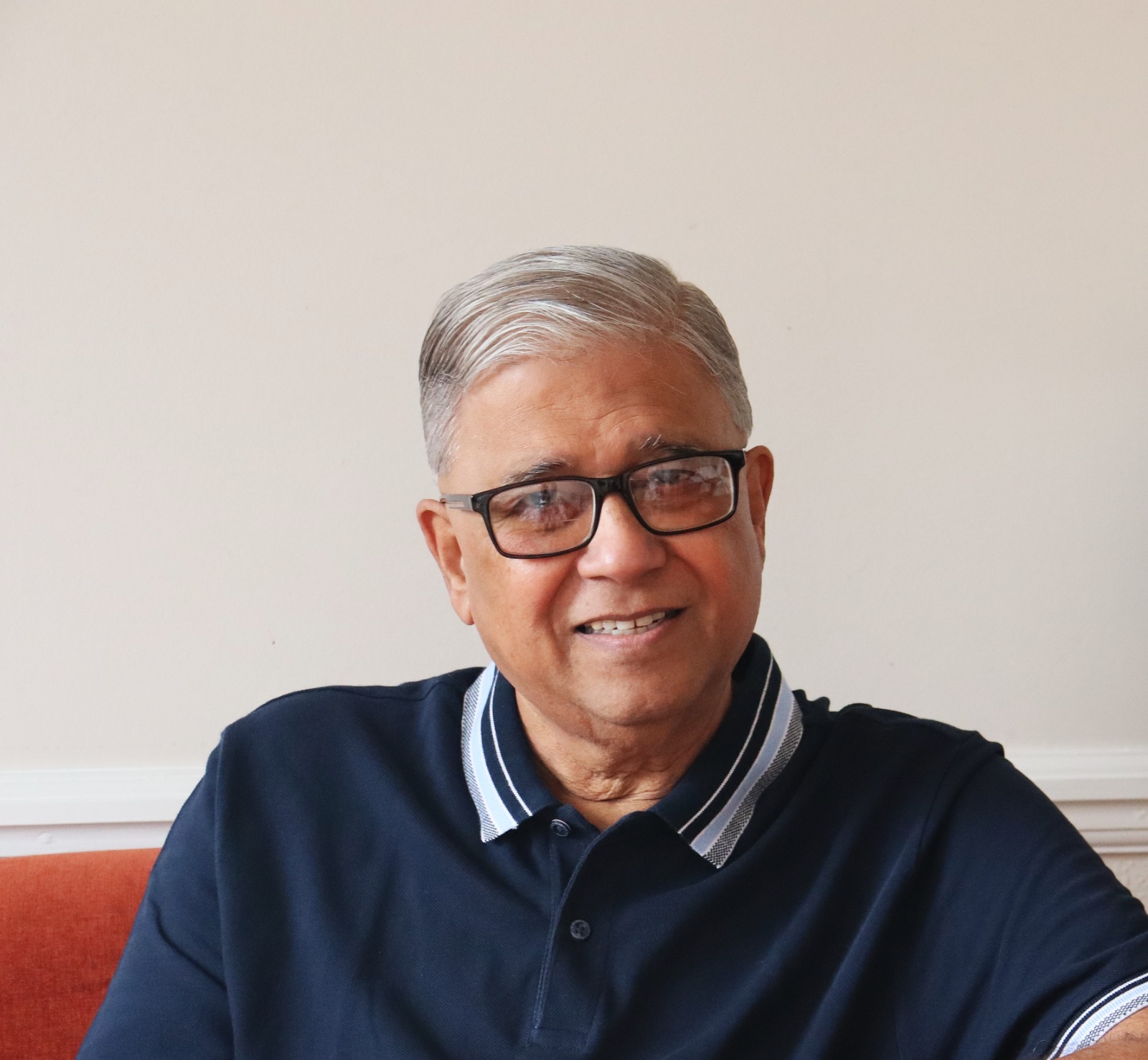
Vivek Patwardhan, author of People at Work: The Untold Story of Labour Management Relations, is an industry doyen in the space of HR and social change. Vivek has spent over 33 years at Asian Paints, retiring as Head HR, and today he dedicates his work to amplifying the voices that corporate India rarely hears—the workers whose struggles remain invisible in boardrooms and policy discussions. His lens offers something we desperately need: a reckoning with the human cost of our economic systems.

Over to Vivek…
This is the last month of the year. While presenting the moments which have left an indelible mark on my mind, I am reliving them—all from my work during 2025.
The problems of the most neglected workers—those who have lost their jobs, those whose dignity is stripped daily, those who work in the shadows—are not on the radar screen of society. They exist in thousands. I have been focusing on studying and writing about them. And their life.
-
Job Loss Has Destroyed Homes
Racold employees were not lucky. Their lives have been torn apart by the sudden loss of jobs. Here is an excerpt from my conversations with them:
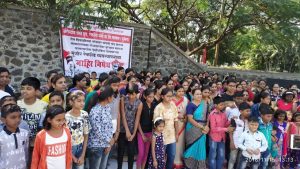
RACOLD employees and families protest
“The dialogue in the family stops or suffers badly.”
One father told me: “My son enrolled for an engineering course. One day over dinner I asked him if his studies were going well. He could not eat his food. He started crying. It was a heart-rending sight to watch my son at dinner, crying inconsolably with his food plate in front of him.”
“What happened?”
“‘Dad, where is the time to study,’ he asked. He had to change three buses to reach his institute and the same way to return. It often took five hours of travel. Staying in a hostel at Pune would be impossible given our financial situation. He was not wrong, and he had not asked me.”
He had accurately guessed his father’s financial status.
This is what unemployment does. It does not just take away income—it takes away futures, conversations, dignity.
-
Crematorium Workers Worry About Future of Their Children
I met the workers at Nigdi (Pune) Crematorium. I asked them if they would have difficulty getting their children married. The opinion was divided.
Some felt that it would not be seen well by the bride’s or bridegroom’s family. Others felt it would be the job of the bride or bridegroom that would matter.
But everyone agreed on one thing: “Our children will not be entering this profession for sure.”
Even those who handle death with dignity every day know that society reserves no dignity for them. Read more here.
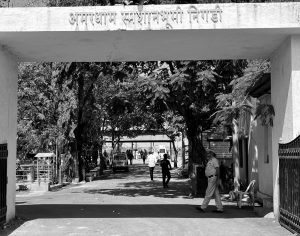
Crematorium workers
-
The Choice Between Work and Dignity
I had a meeting with Soppecom (an NGO working with sugarcane workers) officials and a small group of women sugarcane cutters. The situation is shocking, and that word does not convey the extreme situations women encounter.
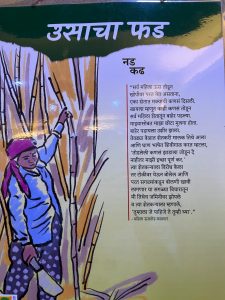
Several posters were displayed during our meeting. One stopped me cold.
Here is the English translation of what the poster says:
“While returning to our camp, we women workers noticed corn cobs in a farm. We women workers took away a few corn cobs to eat. My son, a little boy then, was with me and I moved out of the farm a bit late. The farmer spotted me, abused me and said, ‘You fix the corn cobs back to the plants or else sleep with me.’ I feared that if I resist, the farmer will complain at the camp and it will mean severe reprimand. I lay down on the ground there and told him, ‘Take what you wish to take!'”
— A woman sugarcane cutting worker
This is not an isolated incident. This is the reality for women workers who have no choice but to submit—because resistance means losing the only income that keeps their families alive.
-
Beedi Workers Don’t Even Get The Minimum Wages
Thinking of women workers, one of the most exploited groups among them are beedi workers. They roll a thousand beedies a day. They roll them while making morning tea, while cooking meals, and even stay awake past midnight to complete the quota.
I watched a woman making beedi bundles—they are piece-rated—with her three-year-old son sitting next to her. Read more here.
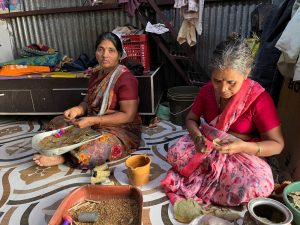
Beedi workers
The Government has declared a minimum wage for them. Nobody pays it—with, I believe, the connivance of the Government.
-
Hope Finds Its Way
My series ‘Their Life After Retirement’ began with the interview of Dipak and Sonali Ghole.
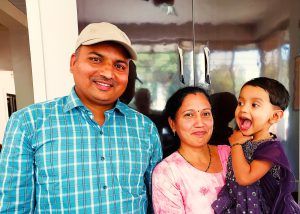
Dipak, who is ITI trained, studied English language for two years and migrated to Australia. A very unusual decision for a person of his background. Read more here.
Renuka Budharam another beedi worker for 30 years, stepped away from that world to become a well-known author, TV anchor and poetess. Read my interview with her, here.
Sometimes, against all odds, workers find a way out. But for every Dipak who makes it to Australia, there are thousands who don’t.
It is easy to exploit people. Particularly in a country where unemployment means starvation. Let us hope that 2026 brings equity and justice to them.
—-
These voices are not just stories from 2025. They are the stories we have been ignoring for decades—the human cost of our economic growth, the price paid by those who have no seat at the table.
This post is part of the End-Of-Year-Reflection-Series bringing you diverse perspectives from different walks of life. As you reflect on your own journey of 2025, please feel free to download the personal reflection guide ‘New Beginnings’ and we also leave you with Mr. Vivek Patwardhan’s signature as a guiding thought ..
“What you leave behind is not what is engraved in stone monuments, but what is woven into the lives of others.”
— Vivek S Patwardhan