Share


As 2025 draws to a close, it’s the perfect moment to pause and reflect. At Flyntrok, we believe the most valuable lessons are found in those moments of reflection. That is why we offer you our End-of-Year Reflection Series.
We have curated and invited experts across diverse fields to share their perspectives on the defining moments and trends of 2025. Each of them bring a unique lens to their respective areas ranging from HR to leadership and research. This series is not just about looking back; it is about gaining the perspective you need to make sense of a changing world and chart your course for 2026 with intention.
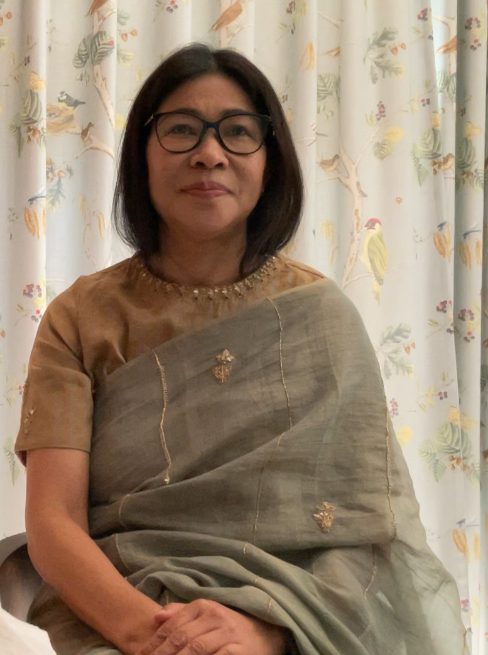
Dr. Jasmine Sangma is a Founder and Managing Director of Nokrek Heights, Tura. She has a PhD in Education and over four decades of experience in education and teachers training. Her perspective comes not from theory alone, but from daily immersion in classrooms, playgrounds, and the evolving world of young learners. If you want to understand where primary education is headed, listen to someone who has spent forty years watching children learn—and watching what gets in their way.
Over to Jasmine…
As I look back at 2025, I feel energised that primary education is slowly but surely moving in the right direction. We need more schools, parents, and teachers to adopt these world views so it becomes a way of life. Here are five trends in 2025 in the space of primary learning that seek to share with you.
1. Learning without pressure
There is no point in cramming information into children anymore.
Information is available everywhere, anytime. What we need to do is build thinking skills—and let them learn without the weight of anxiety pressing them down.
This shift is happening globally, but it is particularly significant in systems like India’s, where for decades, education meant one thing: cracking exams. Engineers and professionals were trained to pass tests, not to solve real problems. When faced with real-life situations, many lack problem solving and critical thinking.
Schools are beginning to ask a different question: What if success was not about how much you remember under pressure, but how well you think when the pressure lifts?
The goal is simple. Children should enjoy what they are learning. They should learn seamlessly without even realising they are learning.
2. Outside the classroom experiences
Classroom learning is becoming less relevant.
Not because classrooms do not matter, but because sitting inside and listening to a teacher is no longer enough. Children need experiences outside the classroom—experiences connected to their everyday lives.
This is not about field trips as extras. It is about recognizing that the world outside is where learning becomes real.
When a child measures the height of a tree instead of solving height problems in a textbook, something shifts. When they observe weather patterns instead of memorizing climate zones, the knowledge sticks differently.
Primary education in 2025 moved toward this understanding: spend more time outside. Let children touch, observe, question, and connect what they learn to the world they live in.
The classroom is still important. But it is no longer the only place where learning happens—or even the most important one.
3. Building student autonomy and agency
As children move from primary to middle and secondary years, one skill becomes essential: the ability to make informed decisions for themselves.
They need to know where they are going. They need goals, and the motivation to pursue them.
Building autonomy means guiding children to become good agents of their own education. It means teaching them not just what to learn, but how to steer their own learning.
Autonomy does not happen overnight. But 2025 showed that schools are beginning to make space for it. As parents and educators weaving in autonomy in learning is a key aspect for us to consider.
4. Technology comfort from early years
Children are growing up in a world where AI is already shaping their lives. Preparing them early means they won’t be catching up later—they’ll be fluent from the start.
This isn’t just about teaching children to use AI tools. It’s about building computational thinking and critical thinking skills from the foundation. It’s about helping them understand how technology works, not just that it works.
I know you probably think that children are exposed to way too much technology and screens as it is. While that is true, the ability to use technology well is lacking. The strength to not give up our agency and critical thinking to technology is something we must help build early on.
The comfort with technology matters. Not just for future careers, but for how children think, solve problems, and engage with information.
5. Soft skills over technical/subject knowledge
The most important shift in 2025 was not about curriculum. It was about what schools started to value.
Adaptability. Resilience. Interpersonal skills. Problem-solving. Creativity.
These soft skills are becoming as important if not more than technical/subject knowledge. —Because soft skills are harder to build instantly /later. They need time, practice, and space to develop.
This shift challenges a long-standing assumption in education: that success comes from mastering content. But content changes. Jobs change. Industries change.
What does not change is the need to adapt, to collaborate, to think creatively under uncertainty.
Schools are beginning to recognize this. They are creating space for children to fail, try again, and learn from the process. Prioritising collaboration over competition. They are asking children to solve problems that don’t have one right answer.
The children who succeed in their professional and personal lives won’t be the ones who memorized the most. They will be the ones who learned how to learn, how to adapt, and how to connect with others.
A wish for 2026
Jasmine’s hope for the year ahead is simple, and profound:
“All children should be as comfortable in school as they are at home. They should be able to learn without anxiety, without pressure. They should enjoy what they are learning.”
It is a vision of education where children do not carry the weight of performance. Where they are free to be curious, to make mistakes, and to grow.
2025 showed us the direction. 2026 is when we take the next steps.
Ready to reflect on your own 2025?
Download “New Beginnings,” our free reflection journal designed to help you pause, process, and prepare for the year ahead.
Visit flyntrok.com/point-of-view